Khodro45 dealer app — a timed auction market for Iranian car dealers
A dealer auction app that keeps a reference price, the inspection report and a six-stage settlement in view at every step of a used-car deal.
Company
Khodro45
Role
Product designer
Type
Product · Systems
Industry
Automotive · B2B marketplace
Team
Product designer, working alongside product and development colleagues
Status
Shipped
Tools
Figma
The problem
Dealers had to price, inspect and pay for used cars they had not seen, in a market that runs on opaque prices and personal trust.
The role
Product designer across the dealer app: market structure, bidding, negotiation and settlement states, the listing flow, memberships, and light and dark themes in Persian.
The result
Version 3.1 of the dealer app drawn as 241 phone screens in 43 sections, with a 24-screen prototype for transaction states.
Figure 01
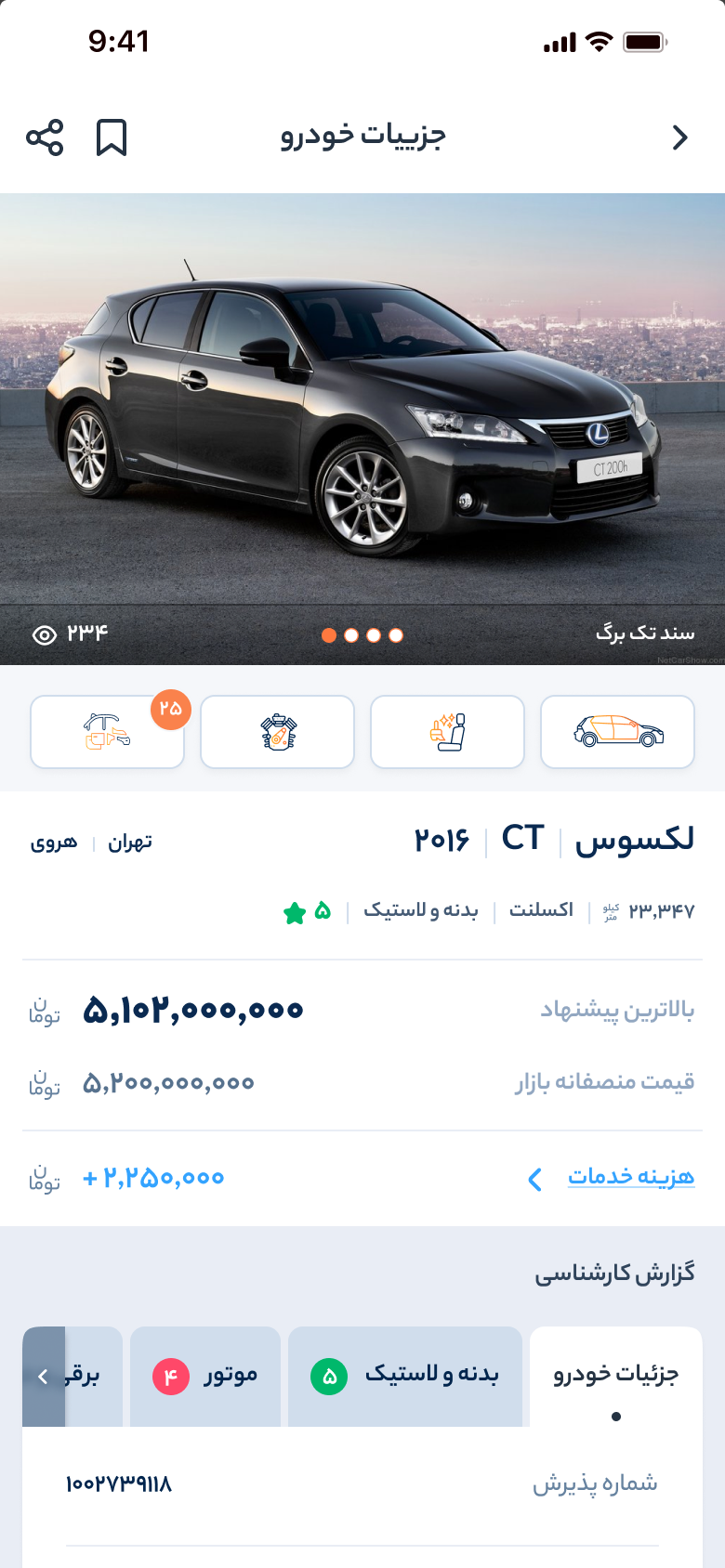
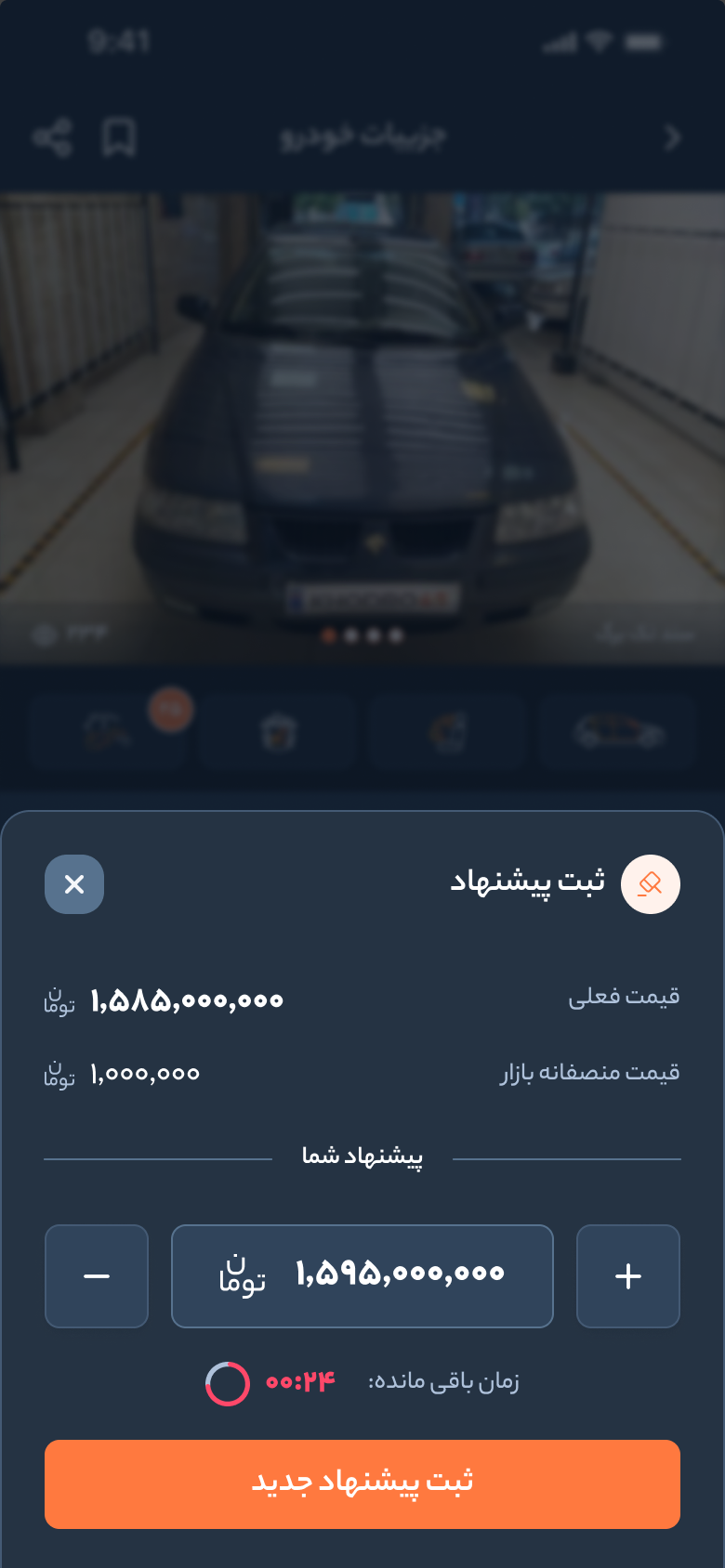
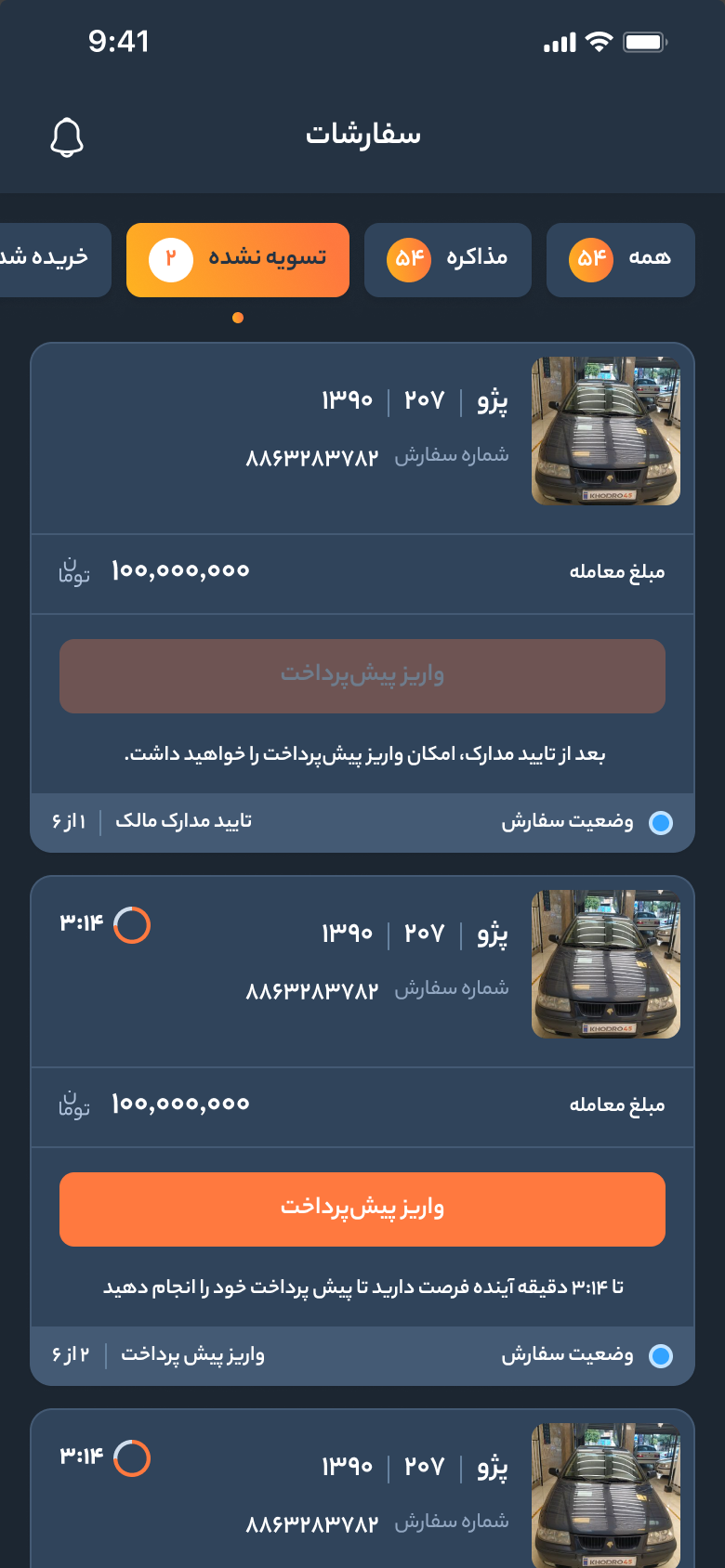
Figure 01The car page with its price block, the bid sheet, and the order list numbered one to six: the dealer's path from a price to a plate release.
01Context
The trade side of a used-car marketplace
Khodro45 is an Iranian online marketplace for used cars. Sellers list cars on it; this app is the other side, where the trade buys them. Its splash screen reads Dealer App V.3.1, so the file is a version of a working product rather than a first concept.
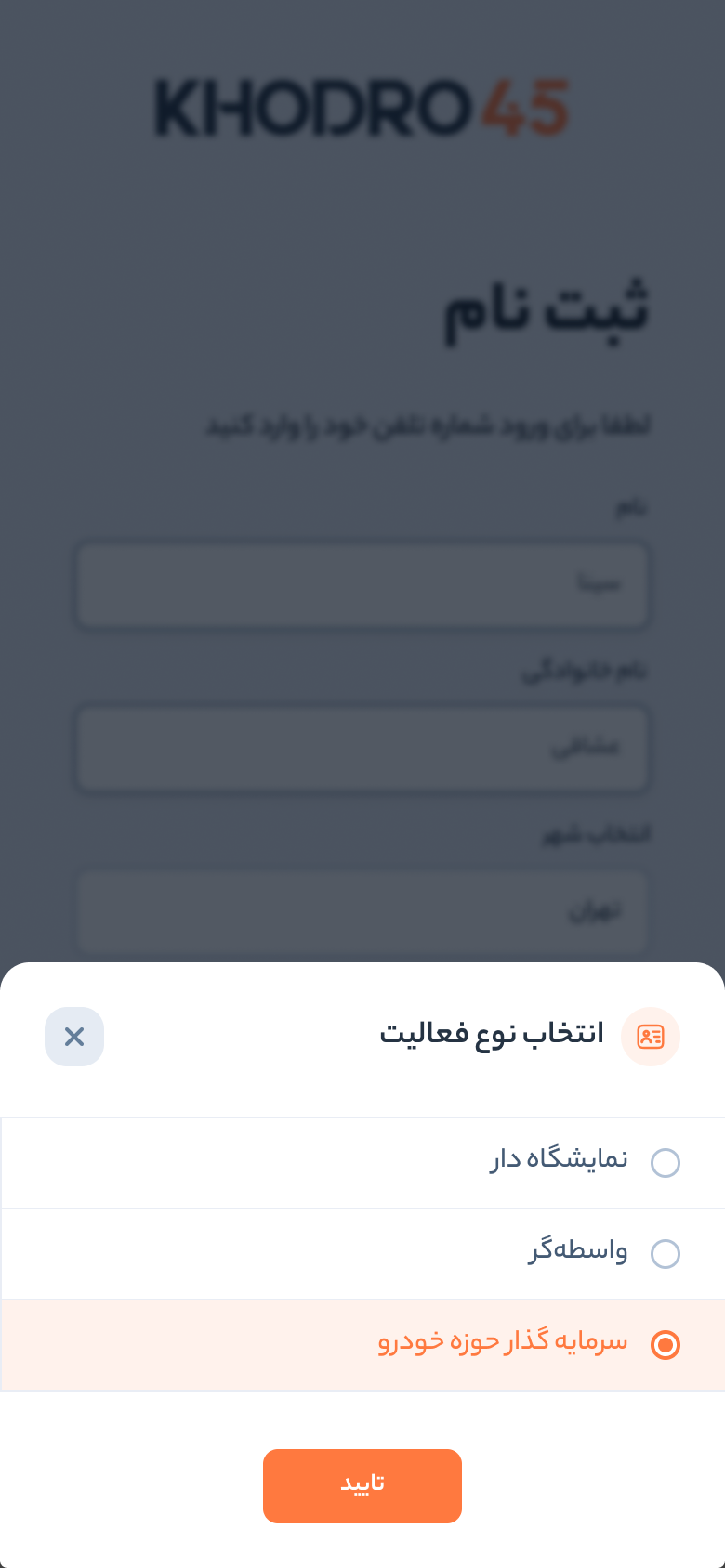
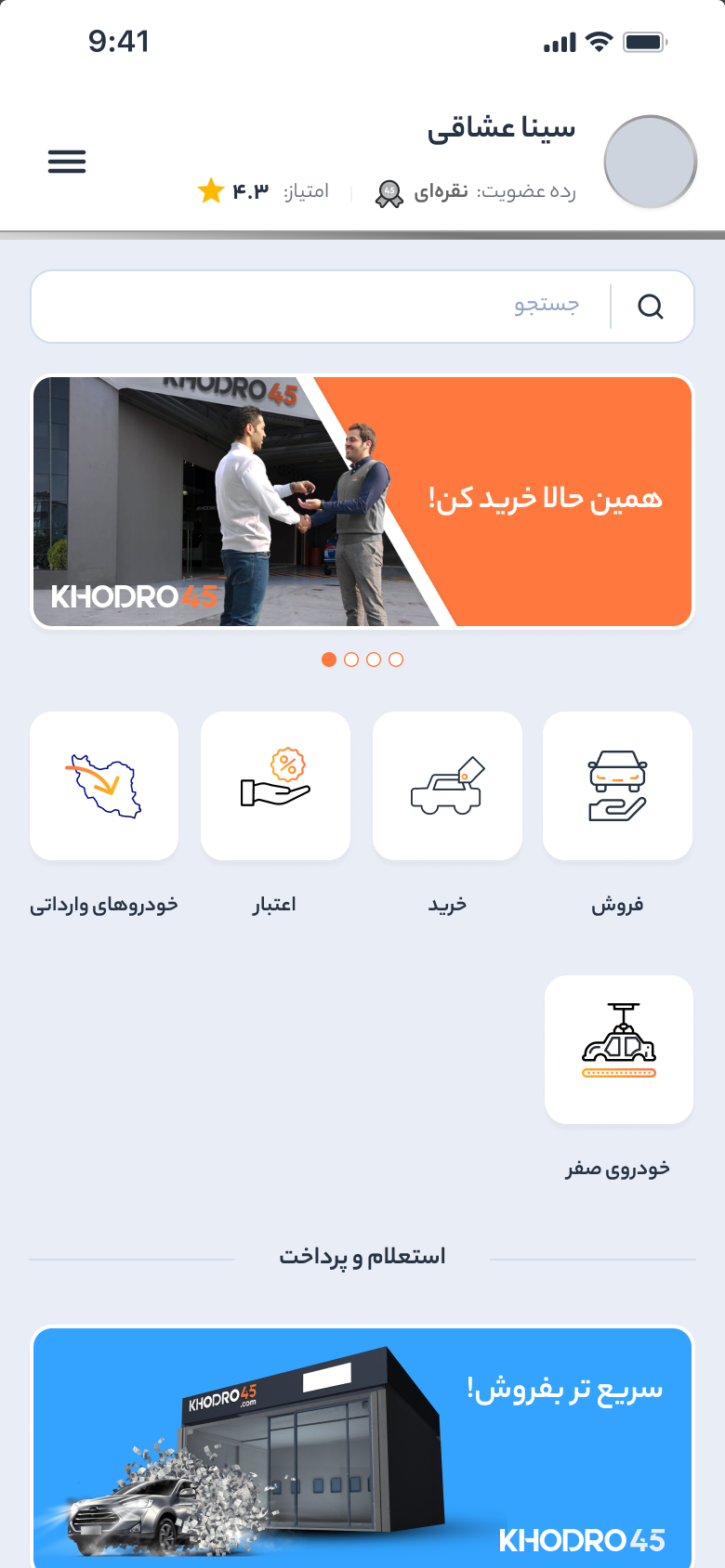
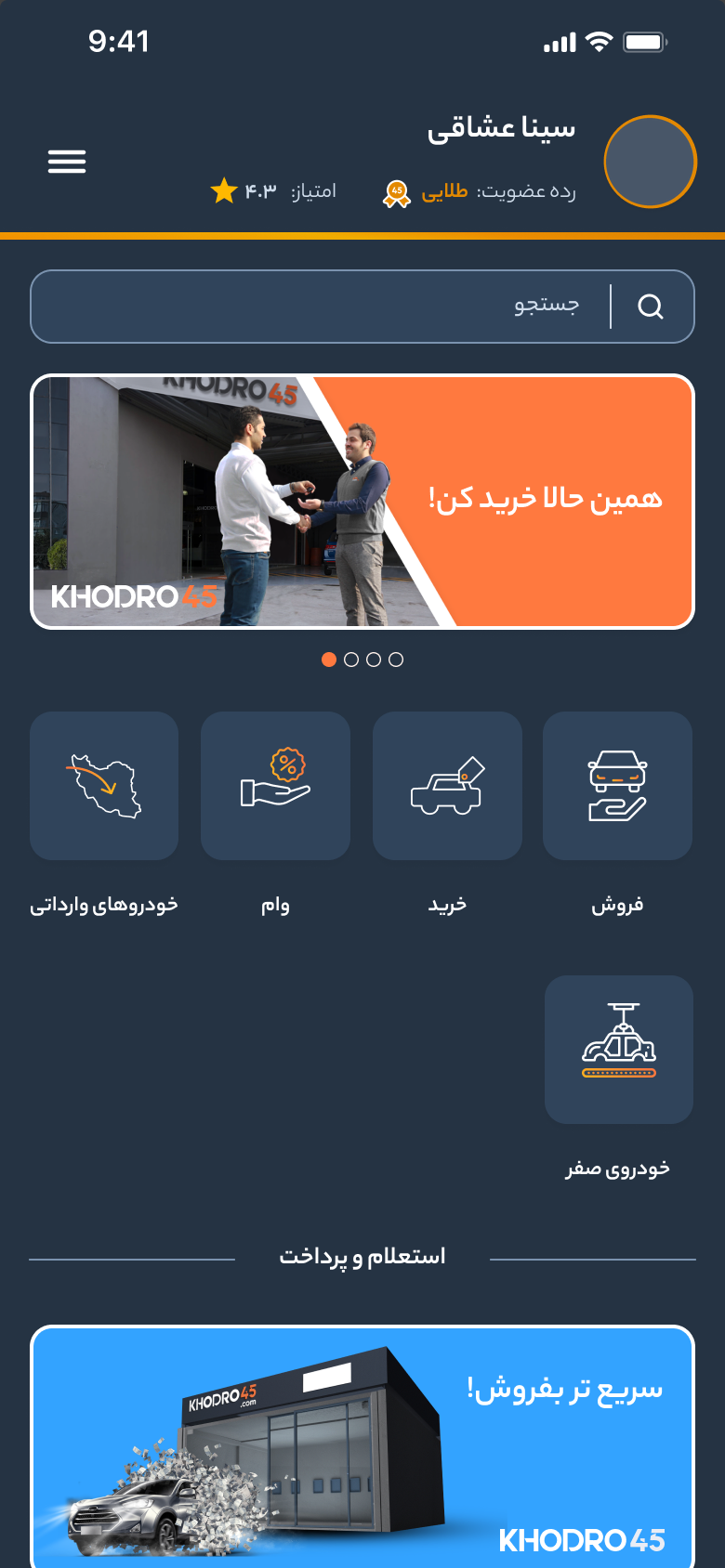
Sign-up asks a new user to choose one of three activities: dealership owner, broker or car-sector investor. Behind the entry sits a services hub that reaches past buying and selling into owning a car: traffic fines, transfer tax, insurance, parts, servicing, inspection and daily prices.
Sign-up: dealership owner, broker or investor
Services hub, light
Services hub, dark
Figure 02Who the app serves and where it starts: the three activities offered at sign-up, and the services hub drawn in both themes.
02Problem
Three questions a dealer could not answer
A dealer buying a car they have not seen needs three answers: what it is worth, what condition it is really in, and who holds the money until the title changes hands. A classified listing answers none of them.
The file answers each with a mechanism: a reference price beside every offer, an inspection report inside the car page, and a settlement that moves through six numbered stages, with a guarantee held by Khodro45 until the last one is done.
03Structure
Three markets, one car page
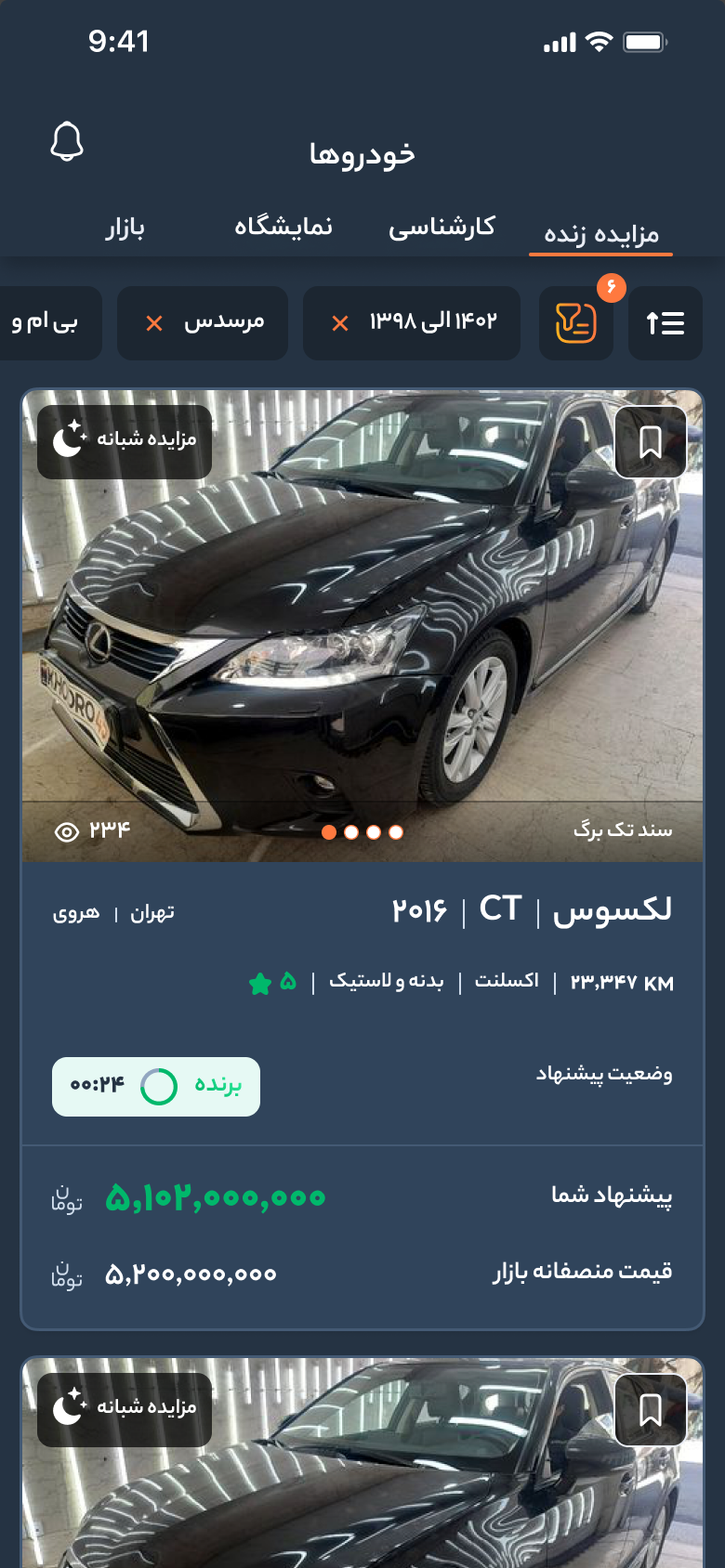
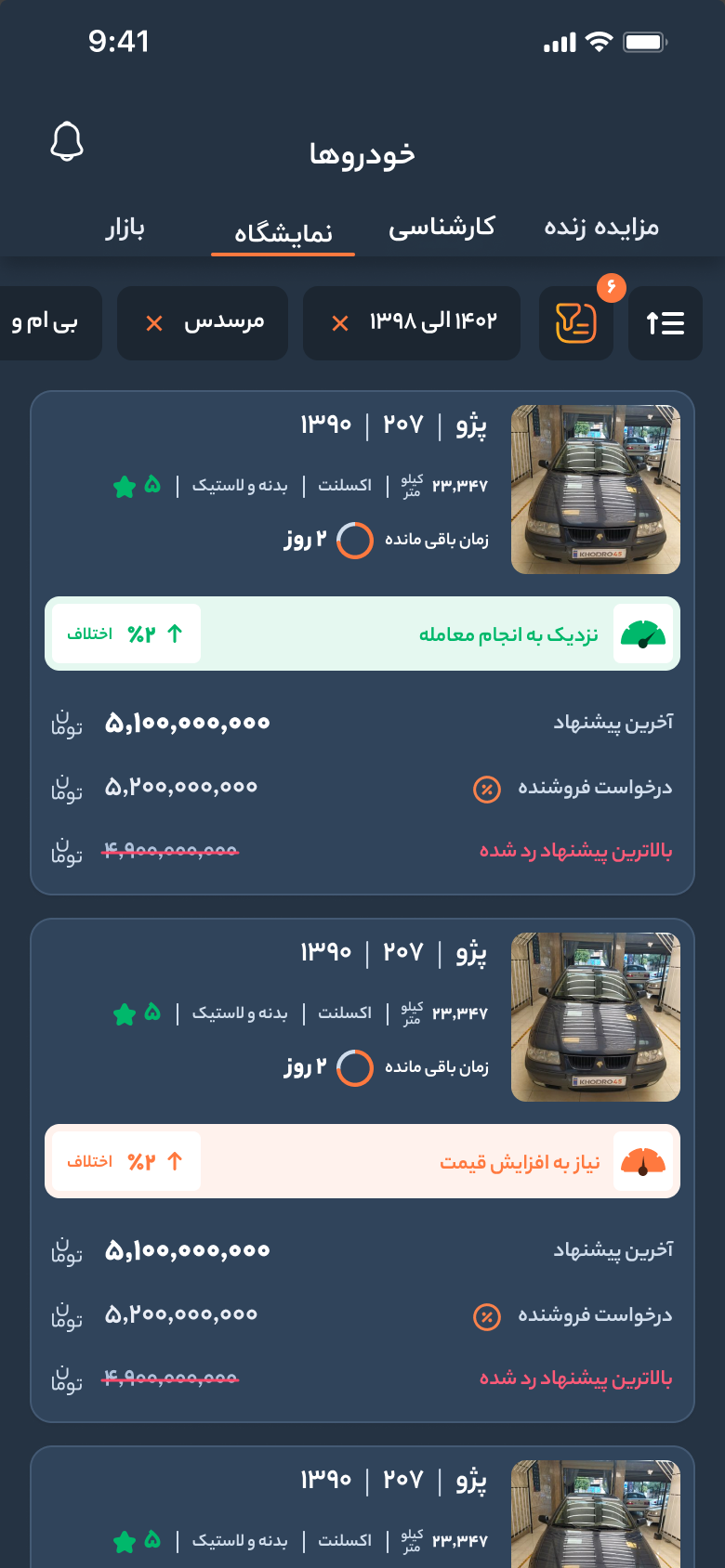
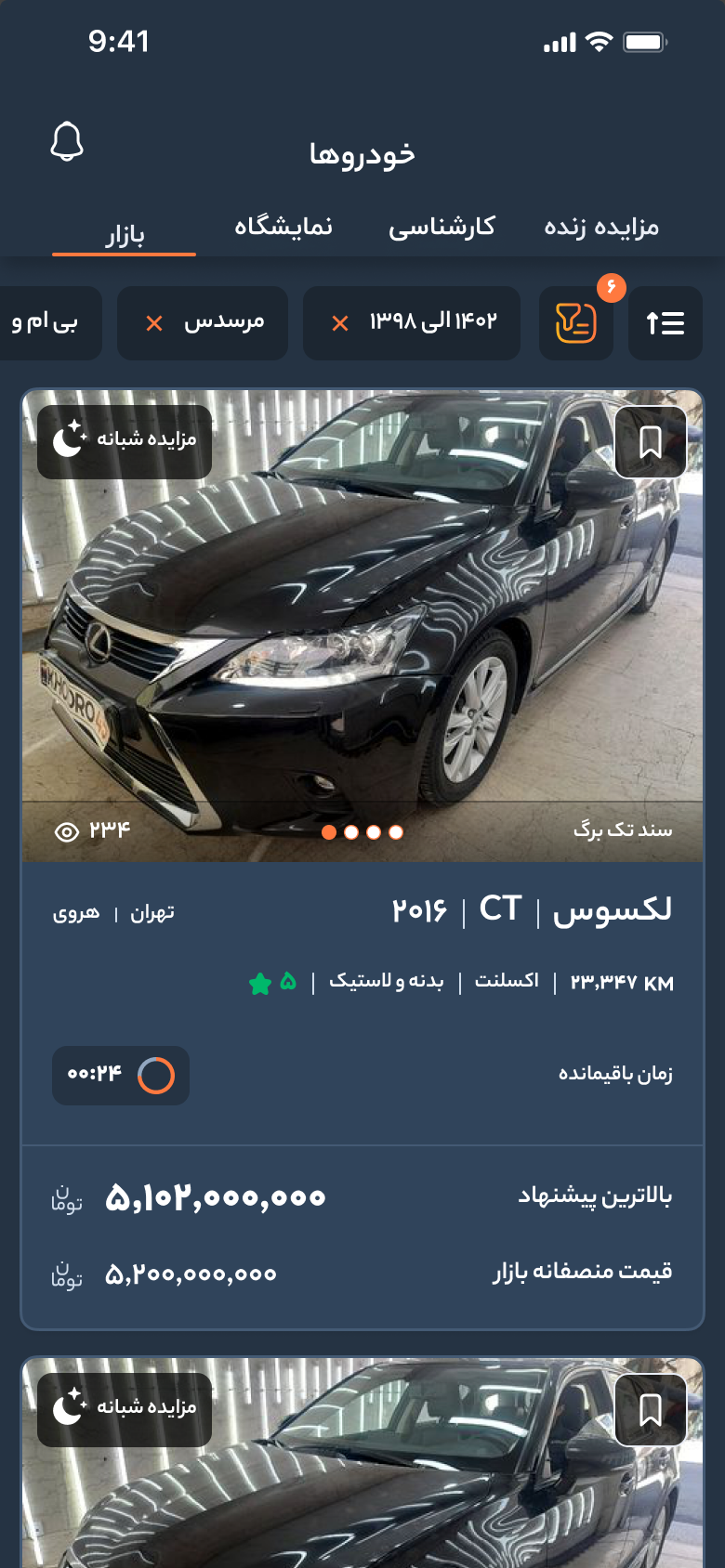
The app has three market lists, drawn as separate sections rather than one list with a filter: Live, the live auction; Market, which the app's tabs call the showroom; and Bazaar. Each has its own version of the car page.
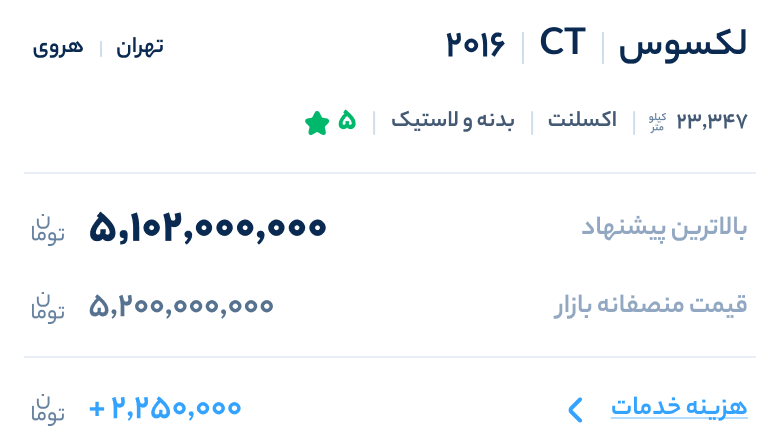
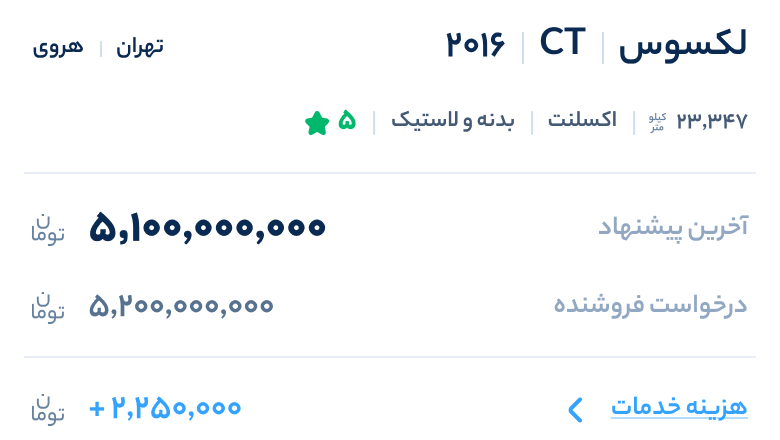
They differ in what sits next to the price. Live cards show the dealer's own bid, whether it is winning, losing or extended, and the fair market price. Market cards show the last offer against the seller's asking price and a label for how close the deal is. Bazaar cards show the time left, the highest bid and the fair market price.
The car page keeps the same split. Live and Bazaar set the highest bid against the fair market price; Market sets the last offer against the seller's asking price.
Live: your bid's status and the fair market price
Live auction
04Key decisions
Decisions the file makes visible
Read from the screens and their states, not from a written rationale; the file has none.
01
Always show a reference price
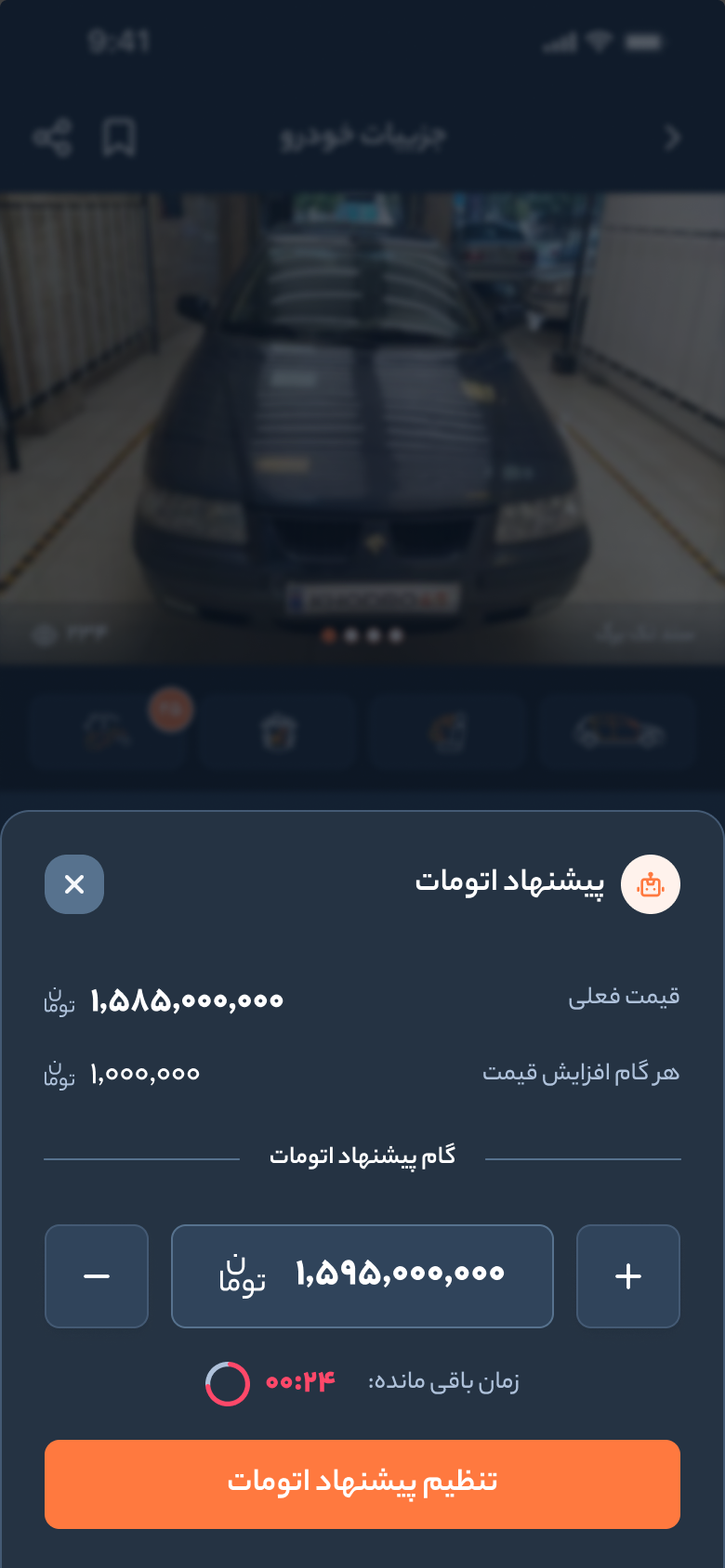
No offer in the app stands alone. Live and Bazaar set it against a fair market price, Market against the seller's asking price, and the bid sheet repeats the reference where the dealer types a number.
Trade-off
The reference changes with the market, so a dealer has to know which number they are being measured against.
Evidence
The Live and Market price blocks, and the bid sheet.
02
Put the inspection inside the car page
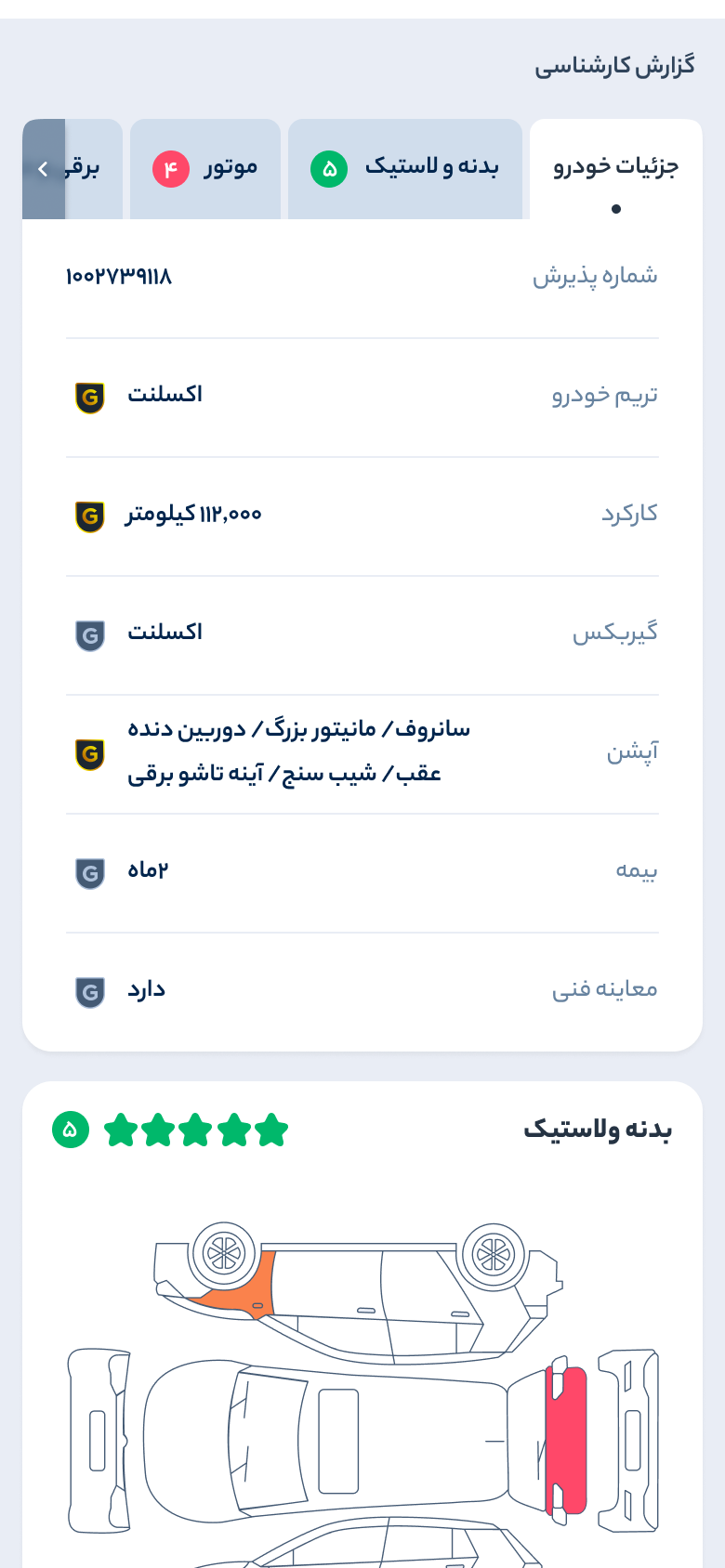
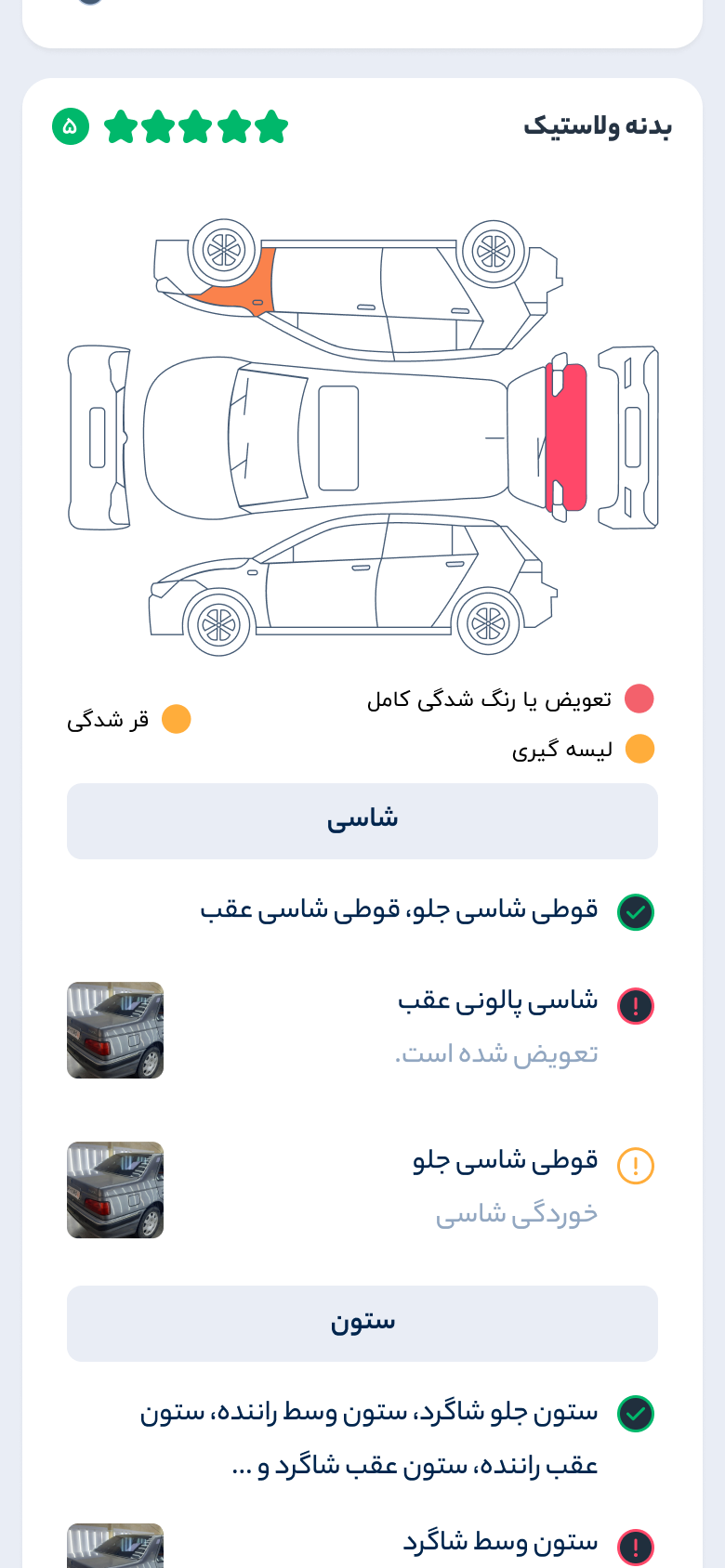
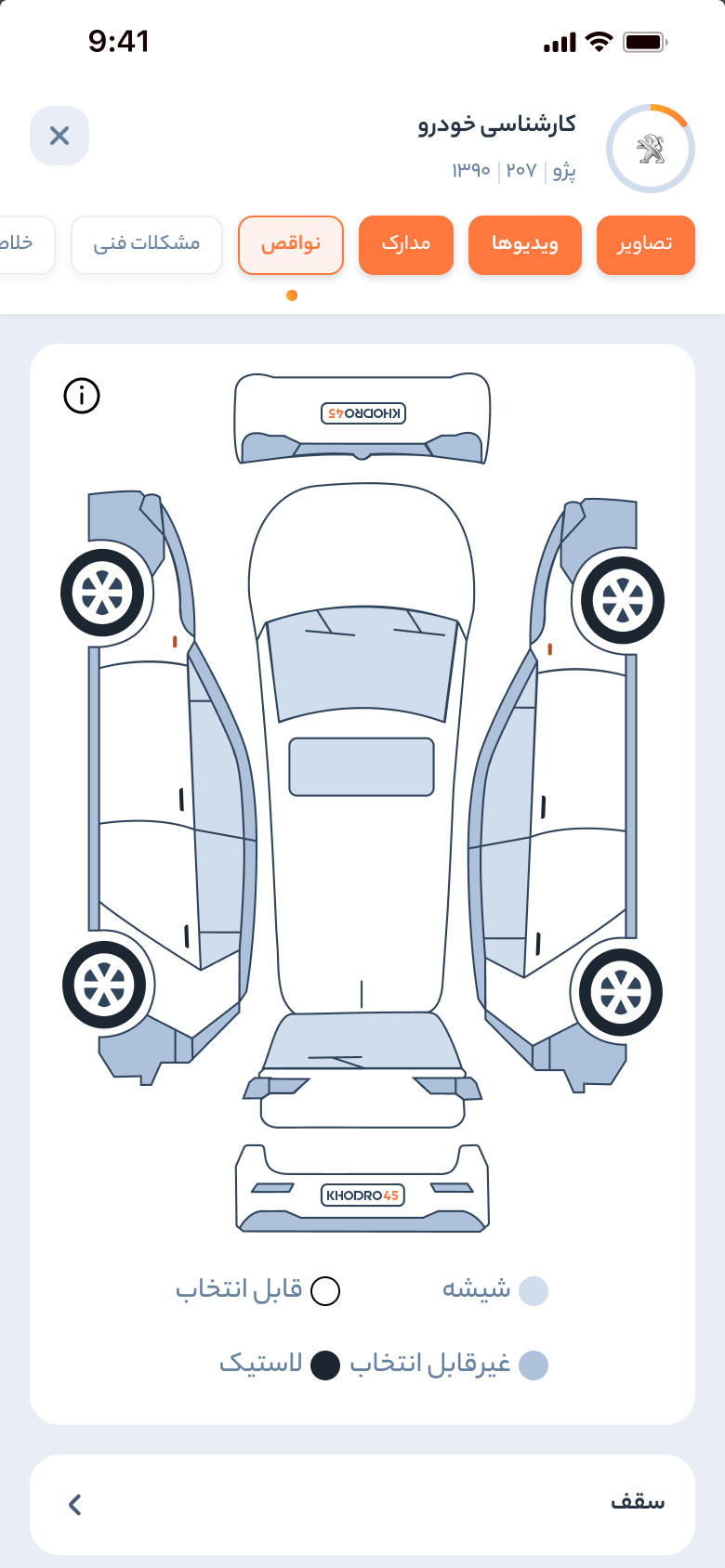
The report is a set of tabs on the car page (car facts, body and tyres, engine, electrical), not a separate document. A damage map colours the affected panels, and every failed part carries a photo.
Evidence
The car facts and the body and chassis findings of the report.
03
Name every state and give it a clock
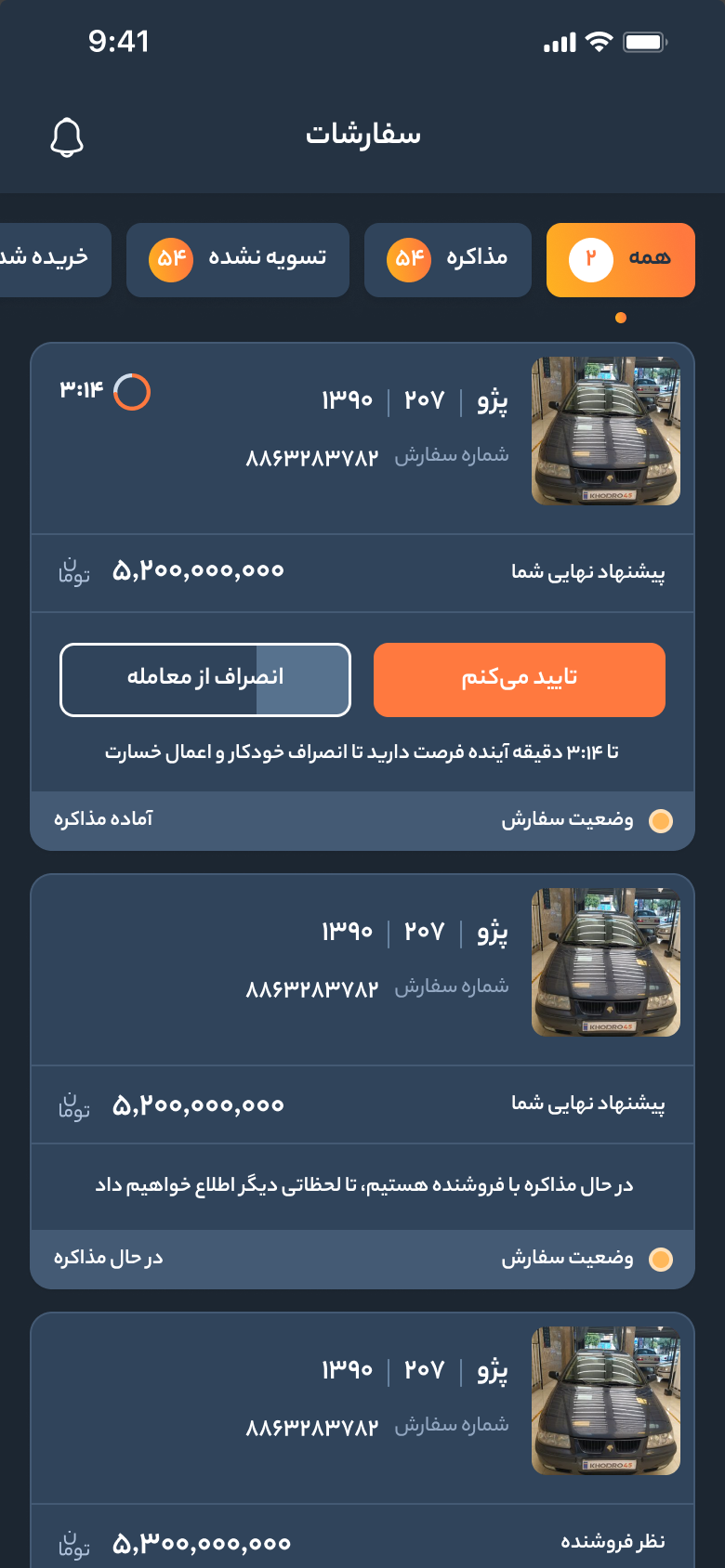
An order is always in a named state with its next step written on the card, and most states carry a countdown. The 3:14 warning says when an offer will be withdrawn automatically and a penalty applied.
05Solution
Price and condition at the point of commitment
The car page is one long scroll: photos, the price block, then the inspection report. The report opens on the car's facts (intake number, trim, mileage, gearbox, options, remaining insurance and a roadworthiness certificate) and scores each system out of five.
Body and tyres get a damage map that colour-codes panels replaced or fully repainted, dented, or scratched. Chassis and pillar findings are listed part by part, each with a verdict and, where a part has failed, a photo.
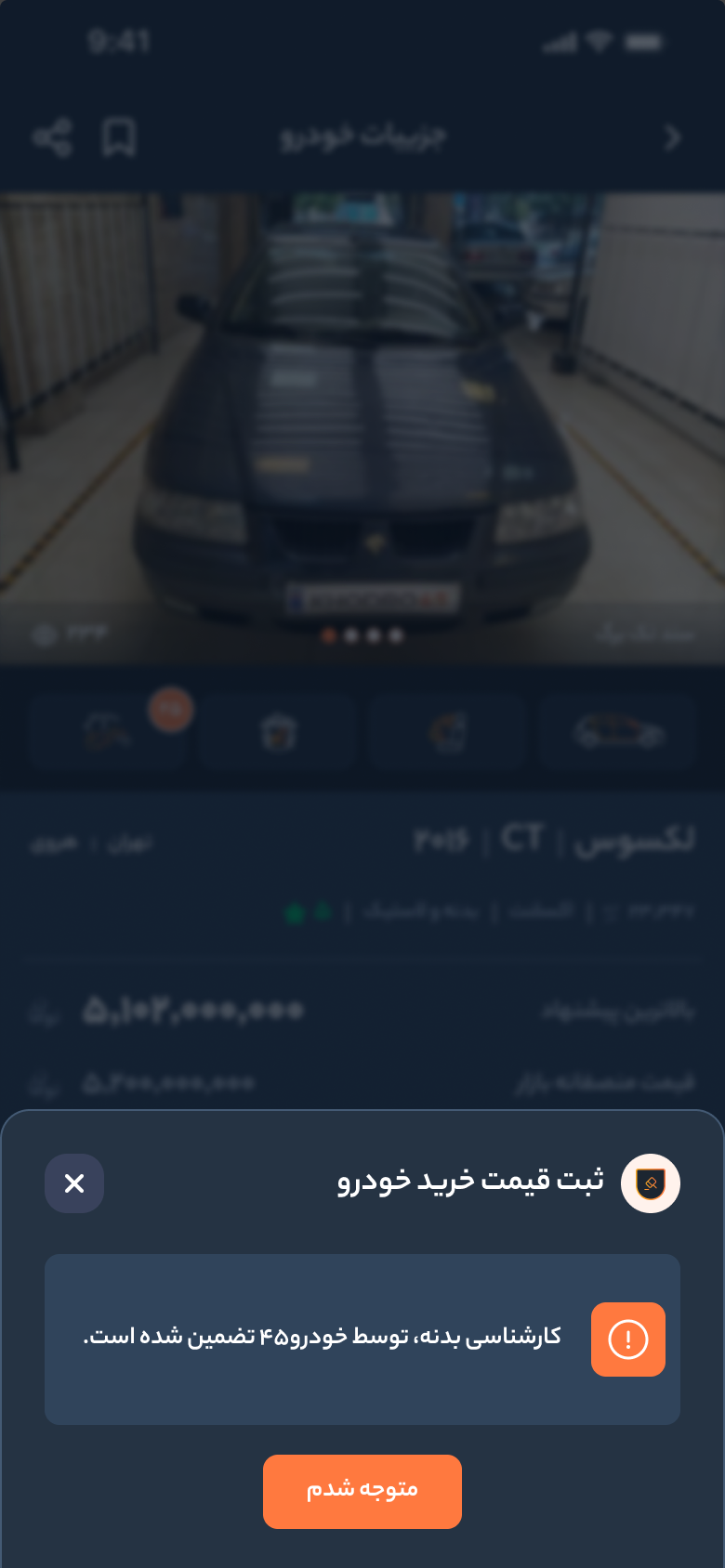
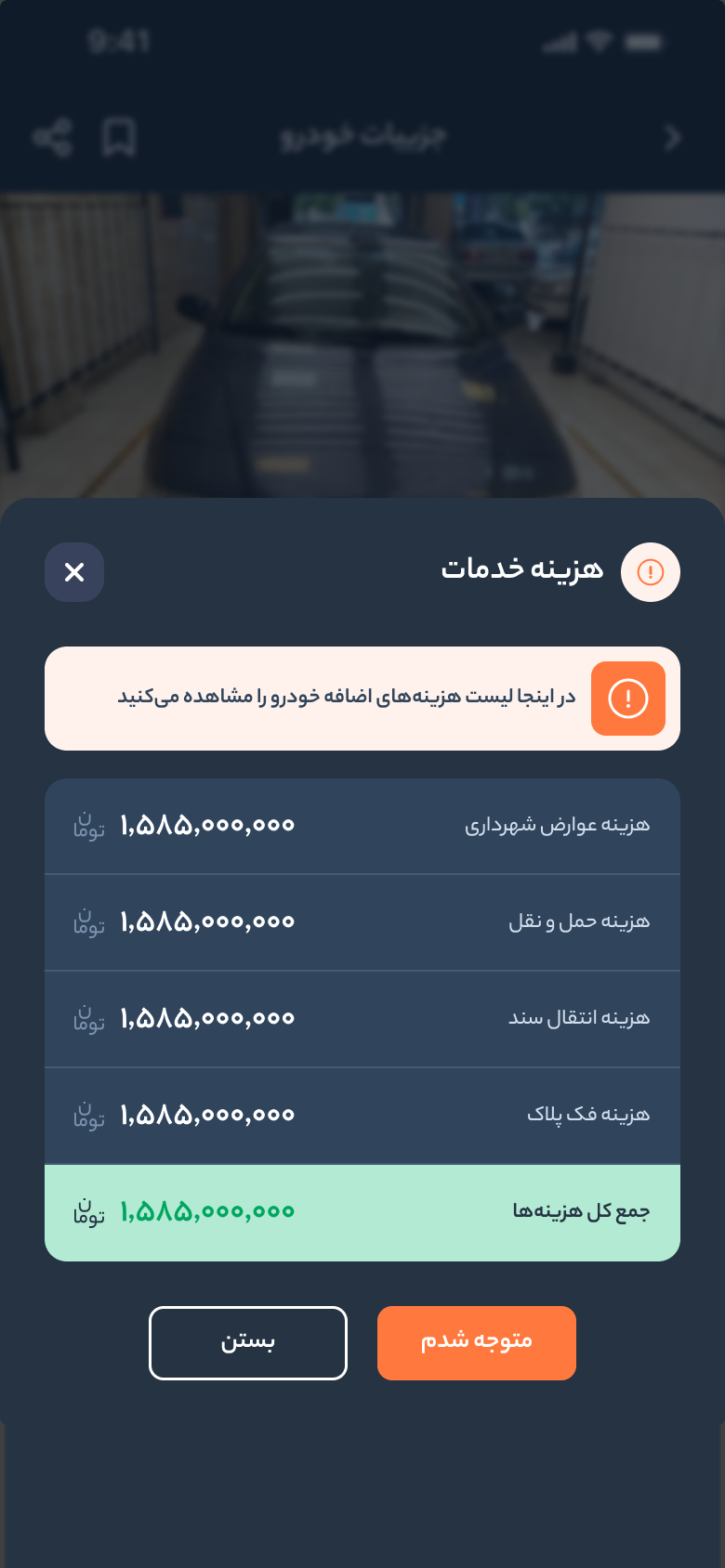
Bidding happens in a sheet over the car page. Beside a manual bid, a dealer can set an automatic bid with its own step. A costs sheet itemises what the price does not include, and a notice states that the body inspection is guaranteed by Khodro45.
Car facts
Automatic bid
06Settlement
Six stages, each with a clock
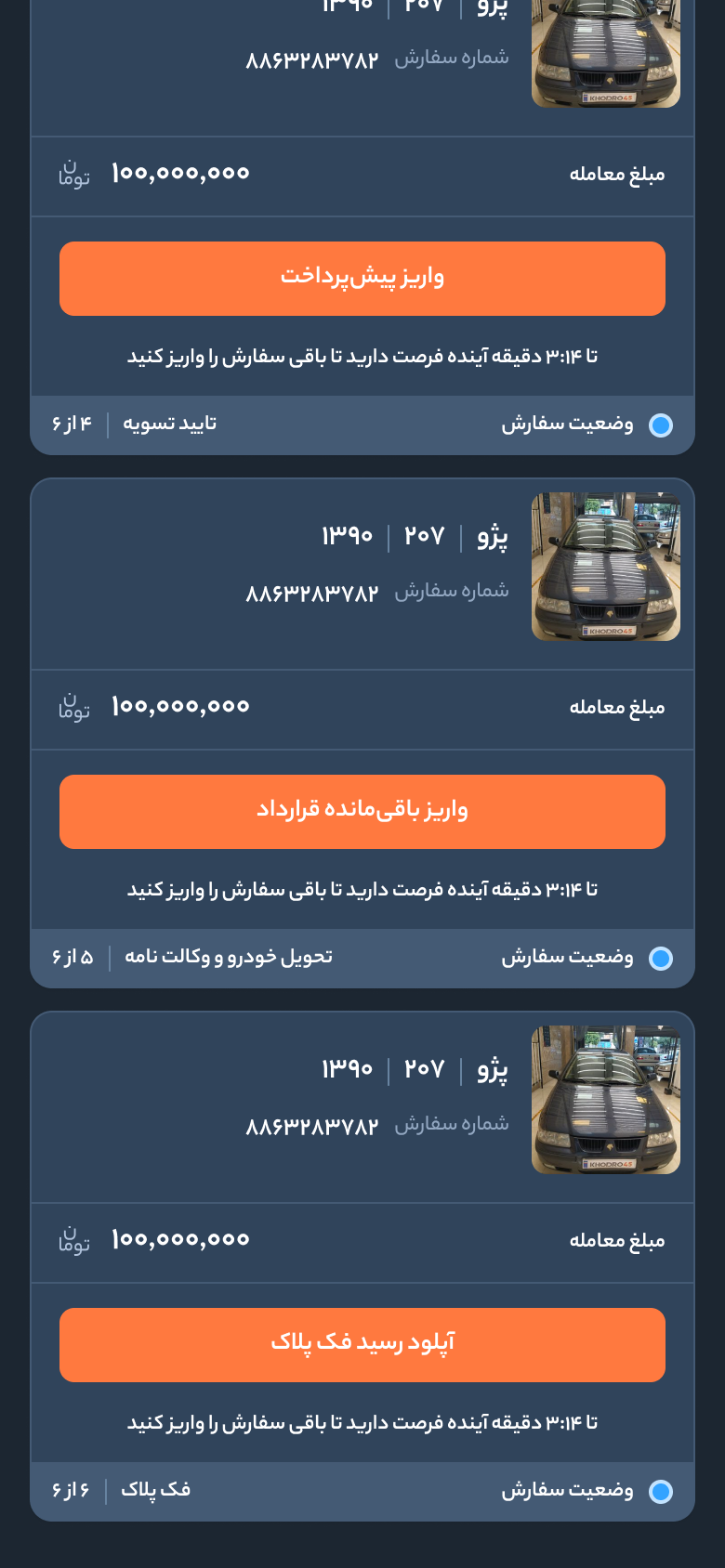
Winning a car starts a settlement that the order list numbers from one to six: the owner's documents are verified, the dealer pays a deposit, then the final settlement, the settlement is confirmed, the car is handed over with a power of attorney, and the plate is released.
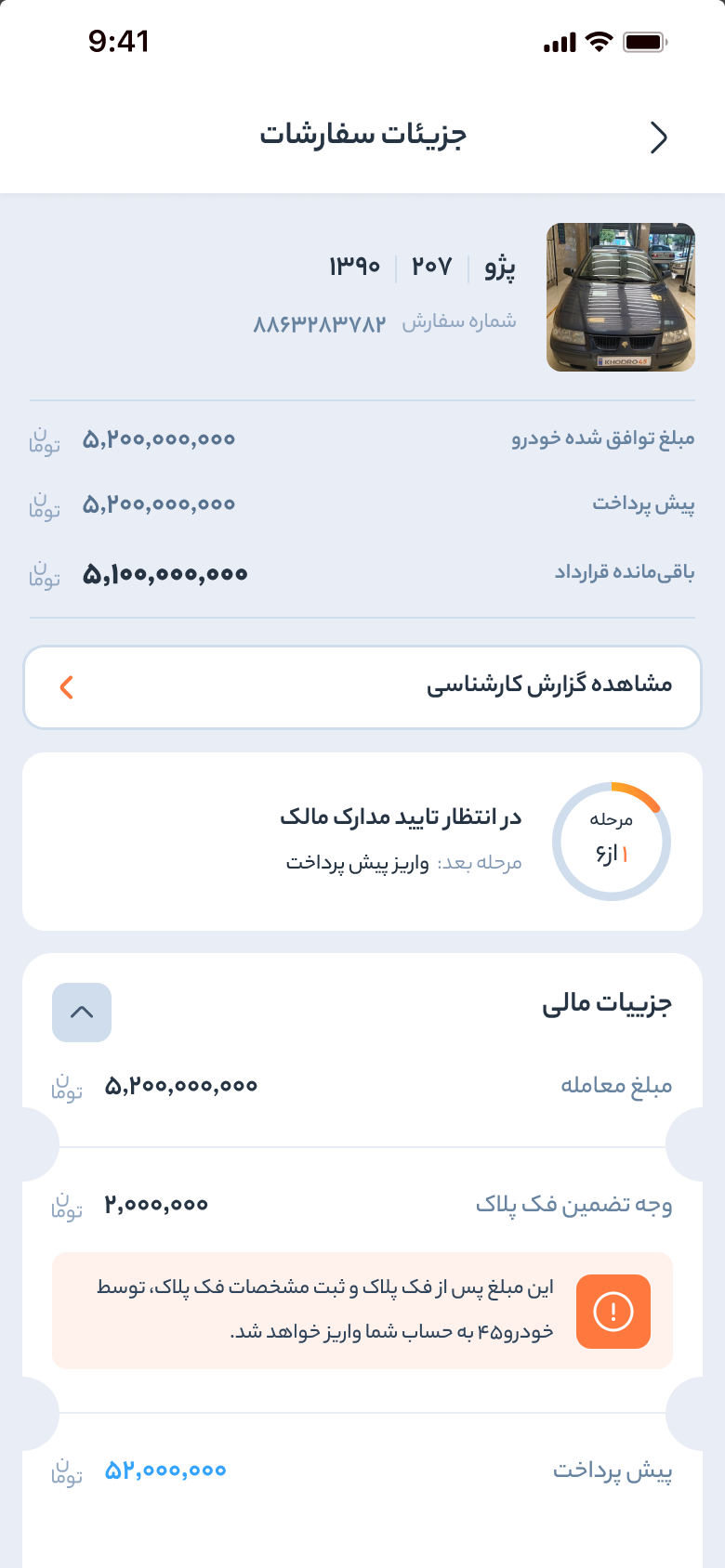
Each card names its stage and the next one, and most carry a countdown. A plate-release guarantee is held along the way; the order page states that Khodro45 pays it back once the release is recorded.
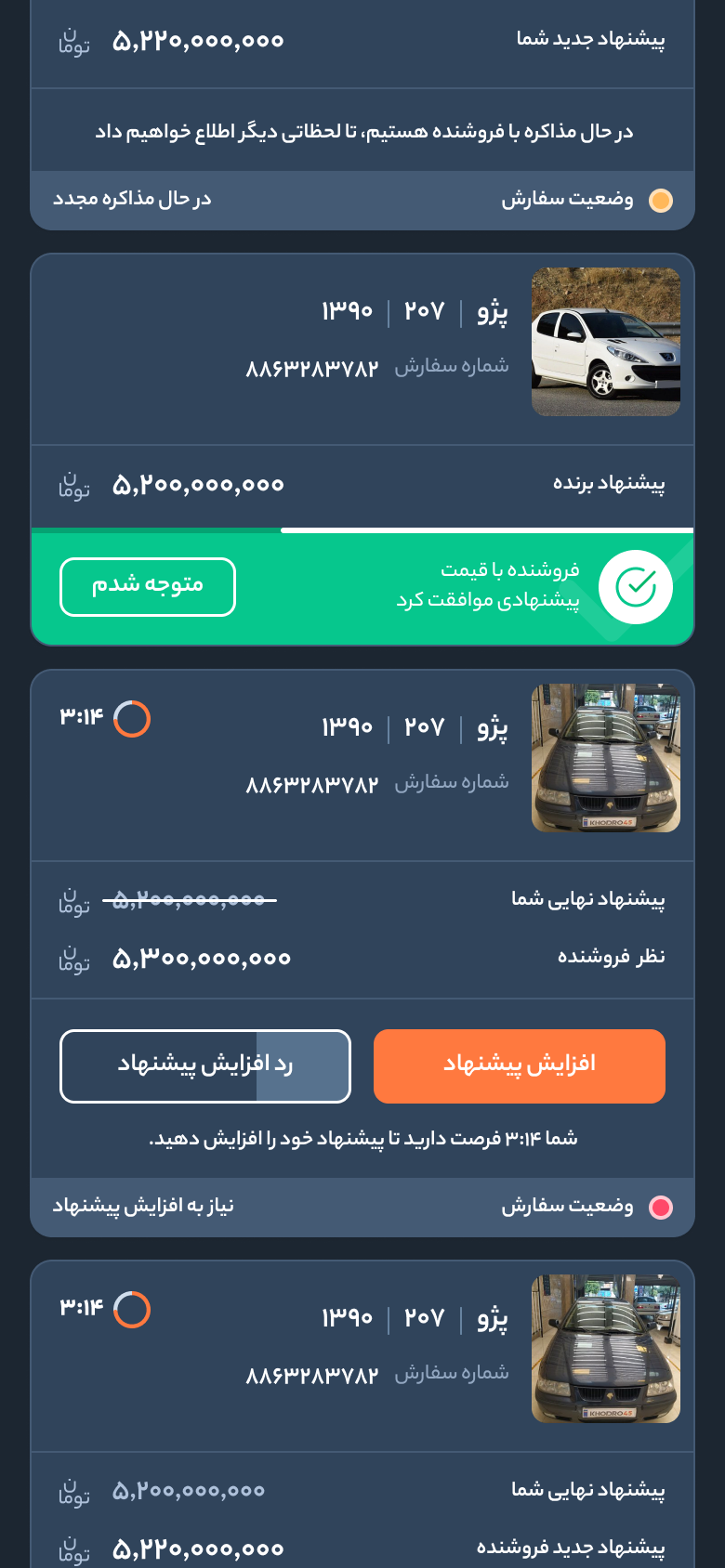
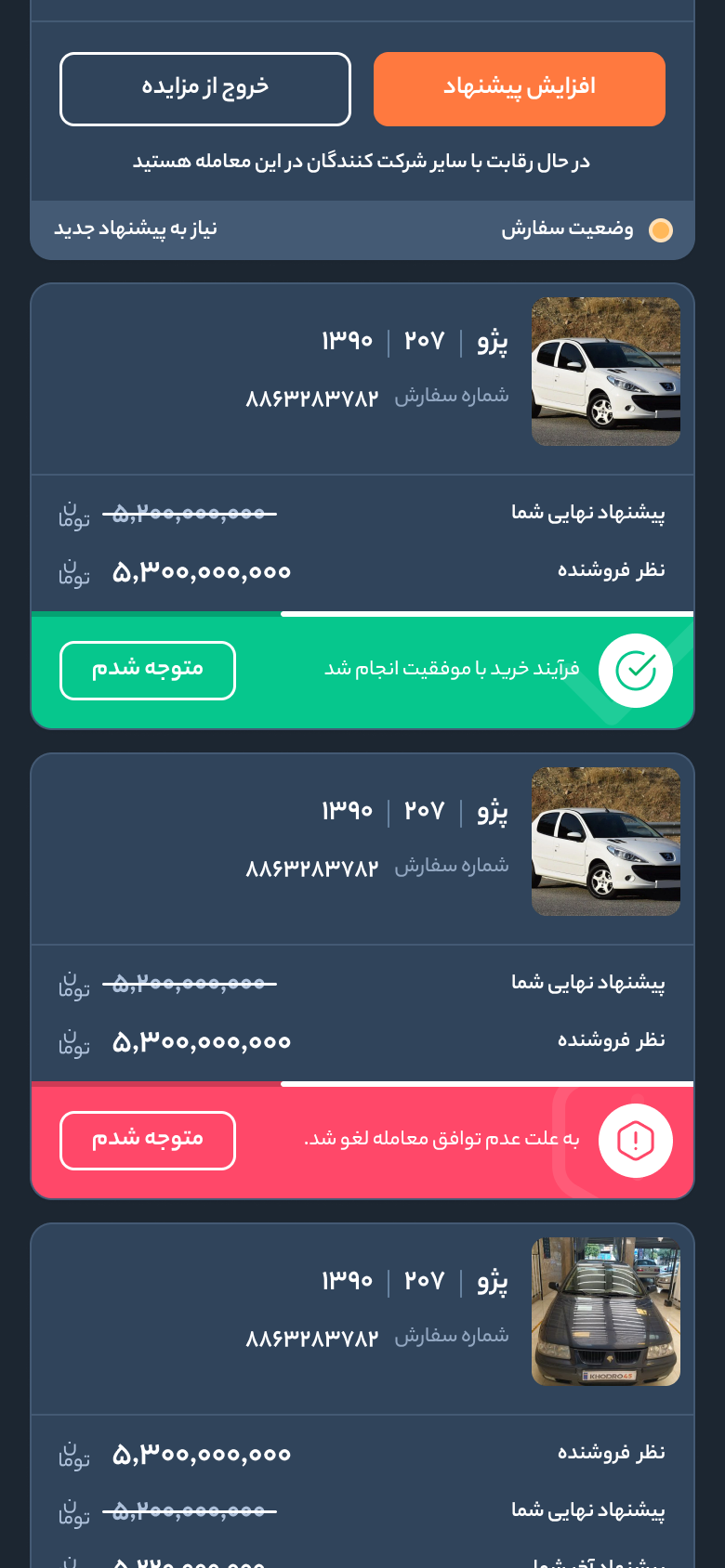
Before settlement comes negotiation. The order list shows every state a deal can be in: ready to negotiate, negotiating, renegotiating, accepted, needs a higher offer, needs a new offer, awaiting approval, completed, and cancelled for lack of agreement. A 24-screen prototype walks one order through them.
The six settlement stages, as the order list numbers them
01
Owner's documentsVerified first; the deposit button stays disabled until they are.
02
DepositPaid within a countdown shown on the card.
Accept the seller's price or keep your own
Ready to negotiate, negotiating, renegotiating
Stages four to six
07Selling
The dealer as a seller
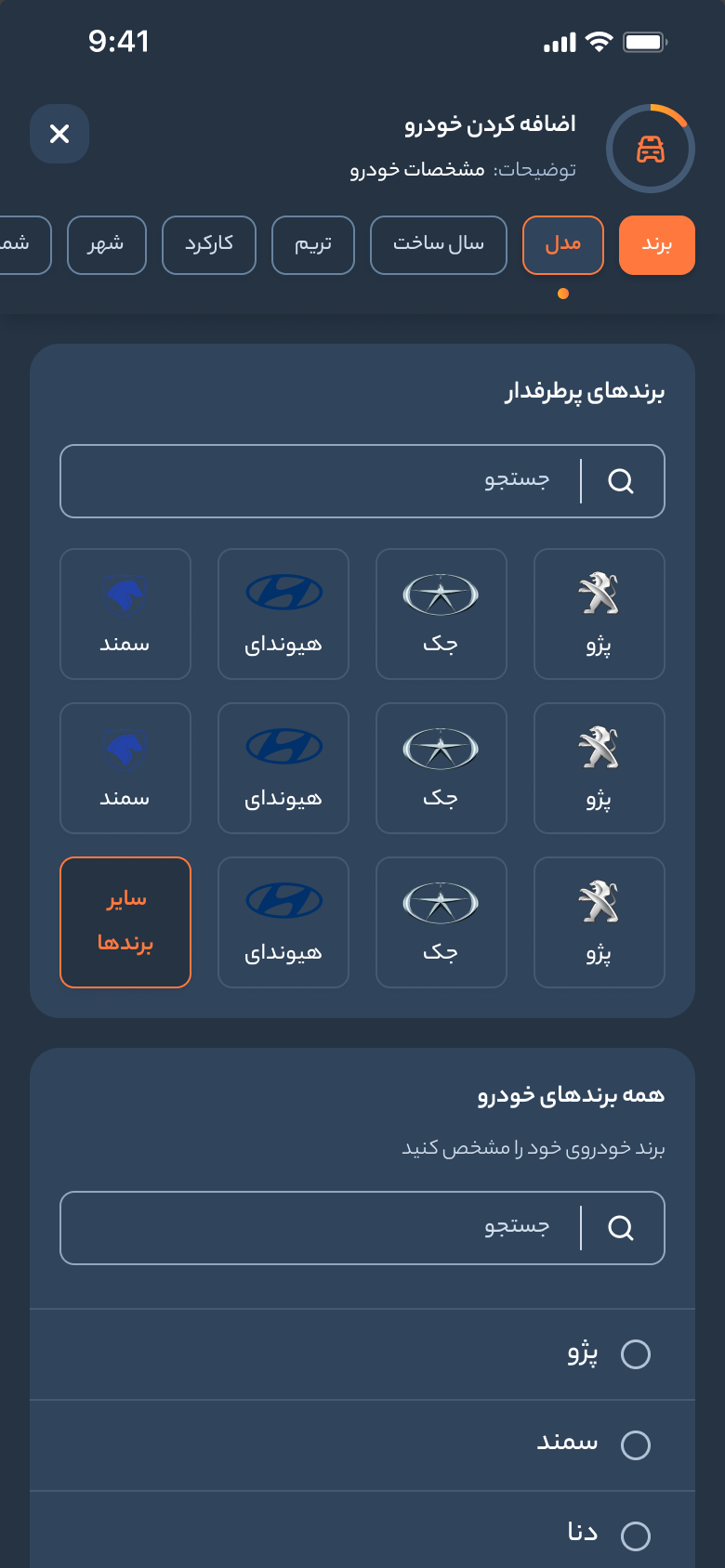
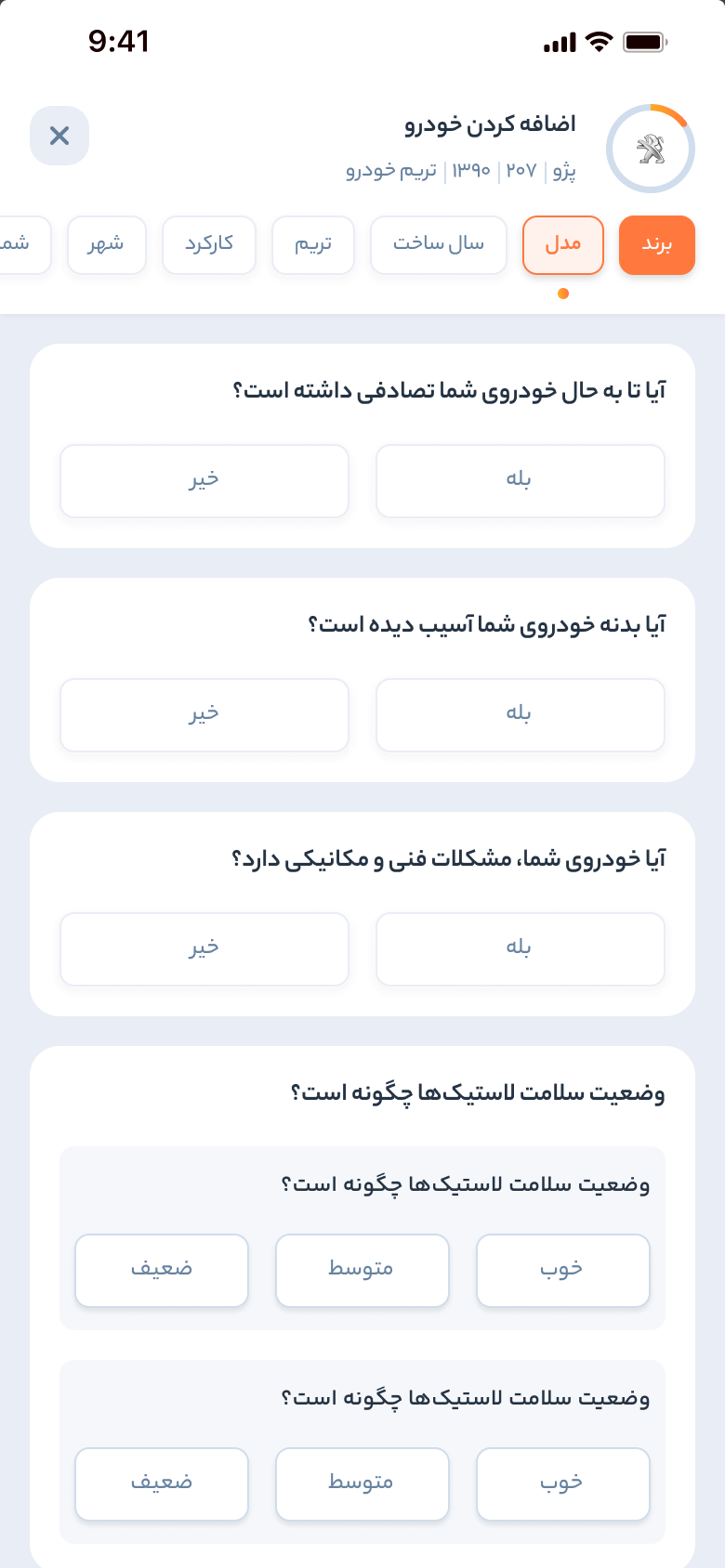
Dealers sell as well as buy. A car is added through a stepped form (brand, model, year, trim, mileage, colour, city, VIN and plate), then questions about ownership and condition: first owner or not, whether the ownership card is in the dealer's name, a spare key, accidents, body damage, mechanical problems and tyres.
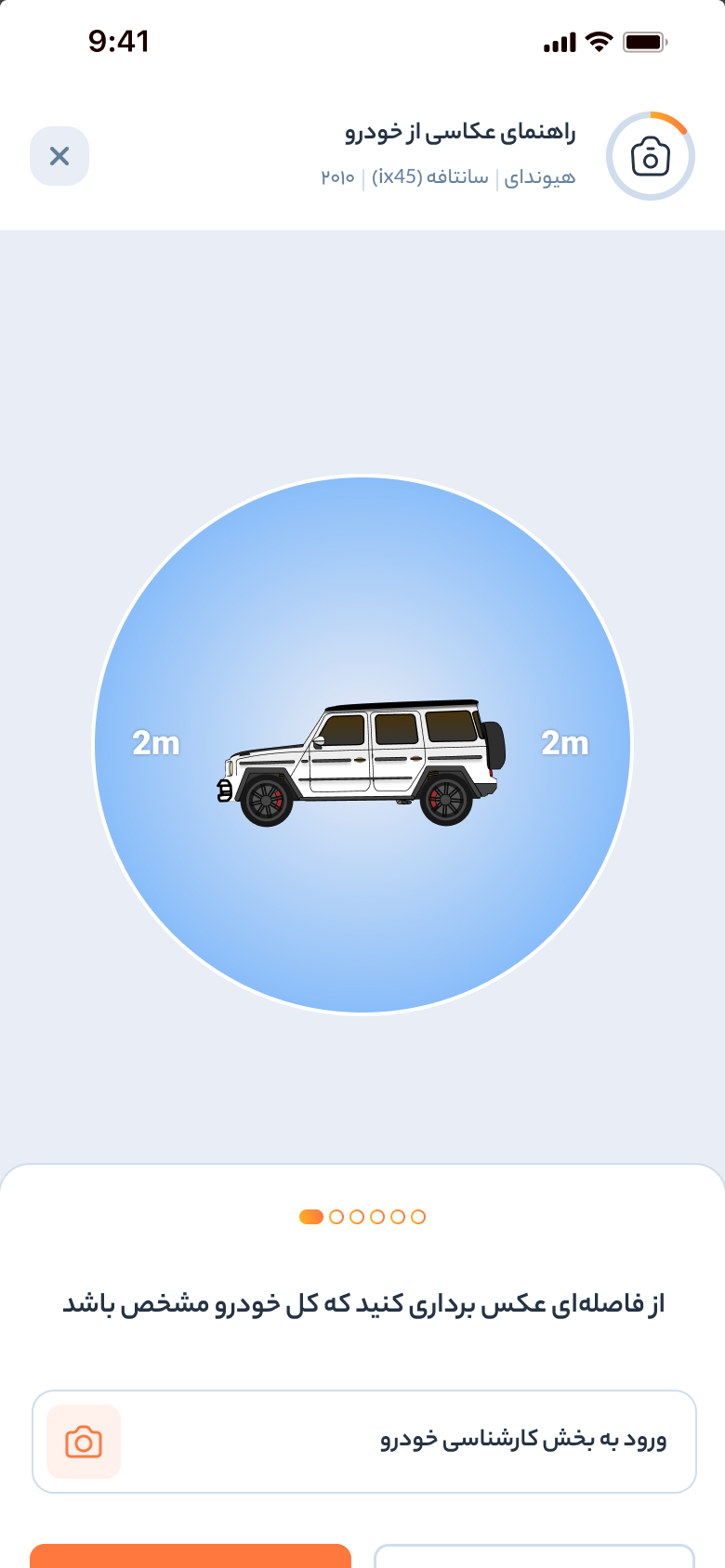
The form hands over to a self-inspection. A photo guide covers light, a clean car, distance and holding the phone sideways. The upload screens ask for each angle, a 15-second engine video with sound, documents and defects, with damaged panels marked on a map of the car.
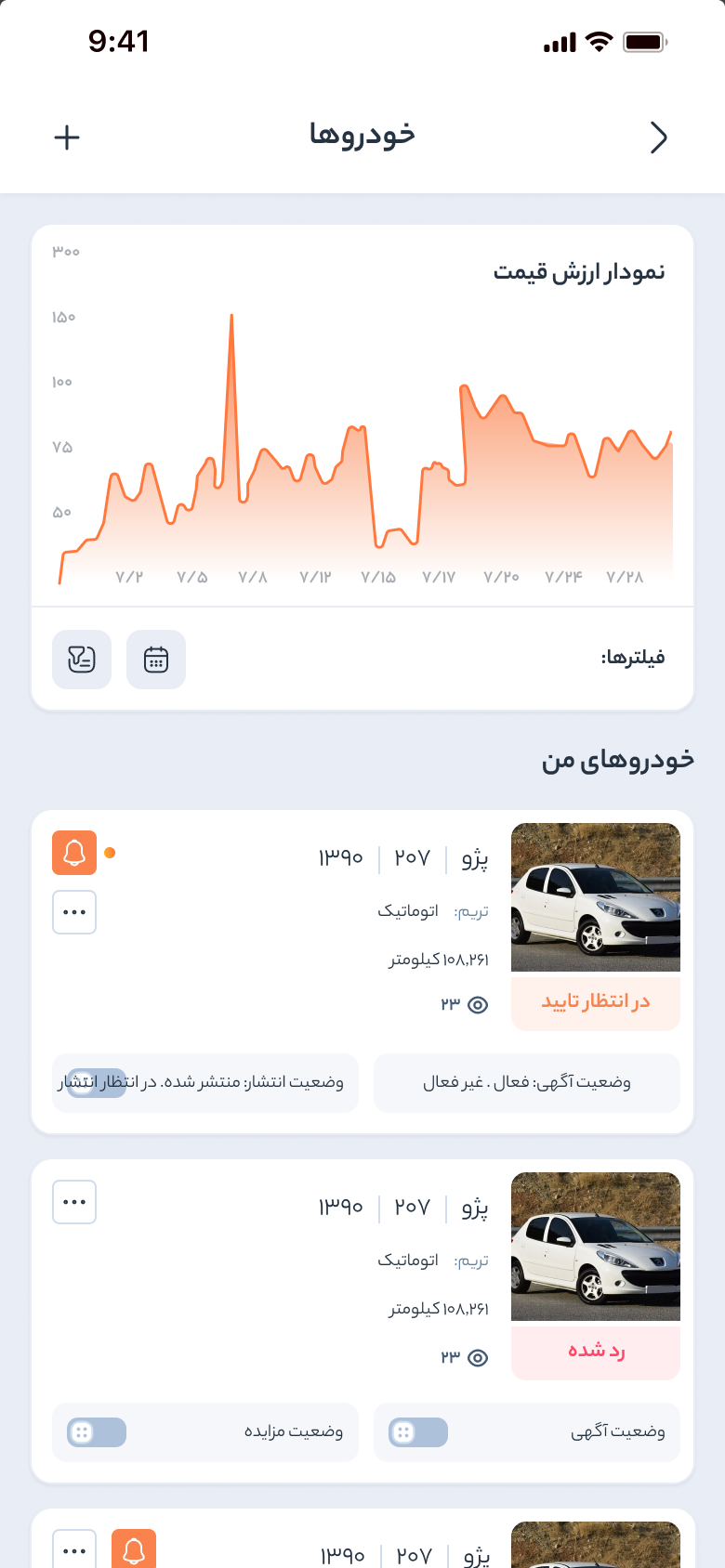
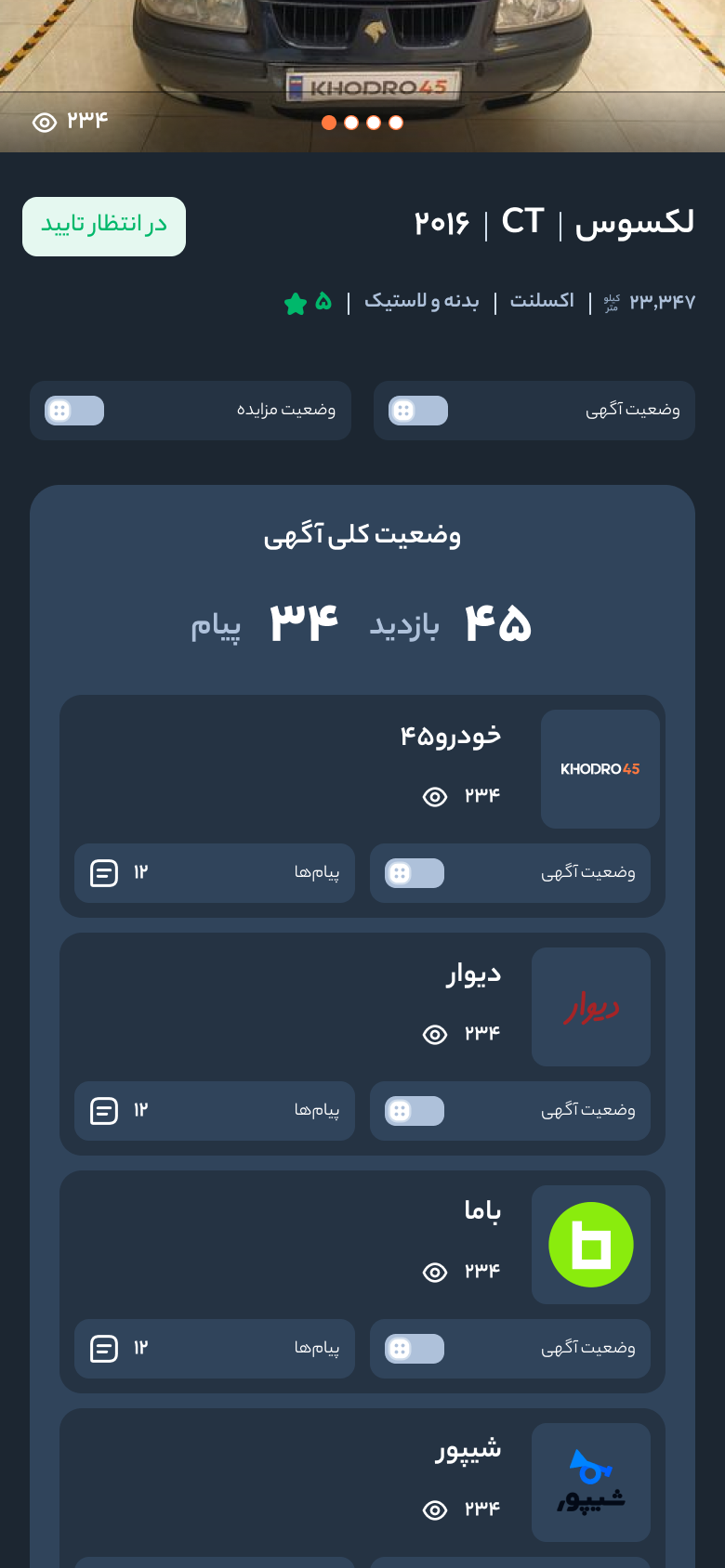
The car then appears in the dealer's own list, where its listing and its auction can each be switched on or off. Its page shows views and messages in total and for each platform it is listed on: Khodro45, Divar, Bama and Sheypoor.
Brand first, then model, year and trim
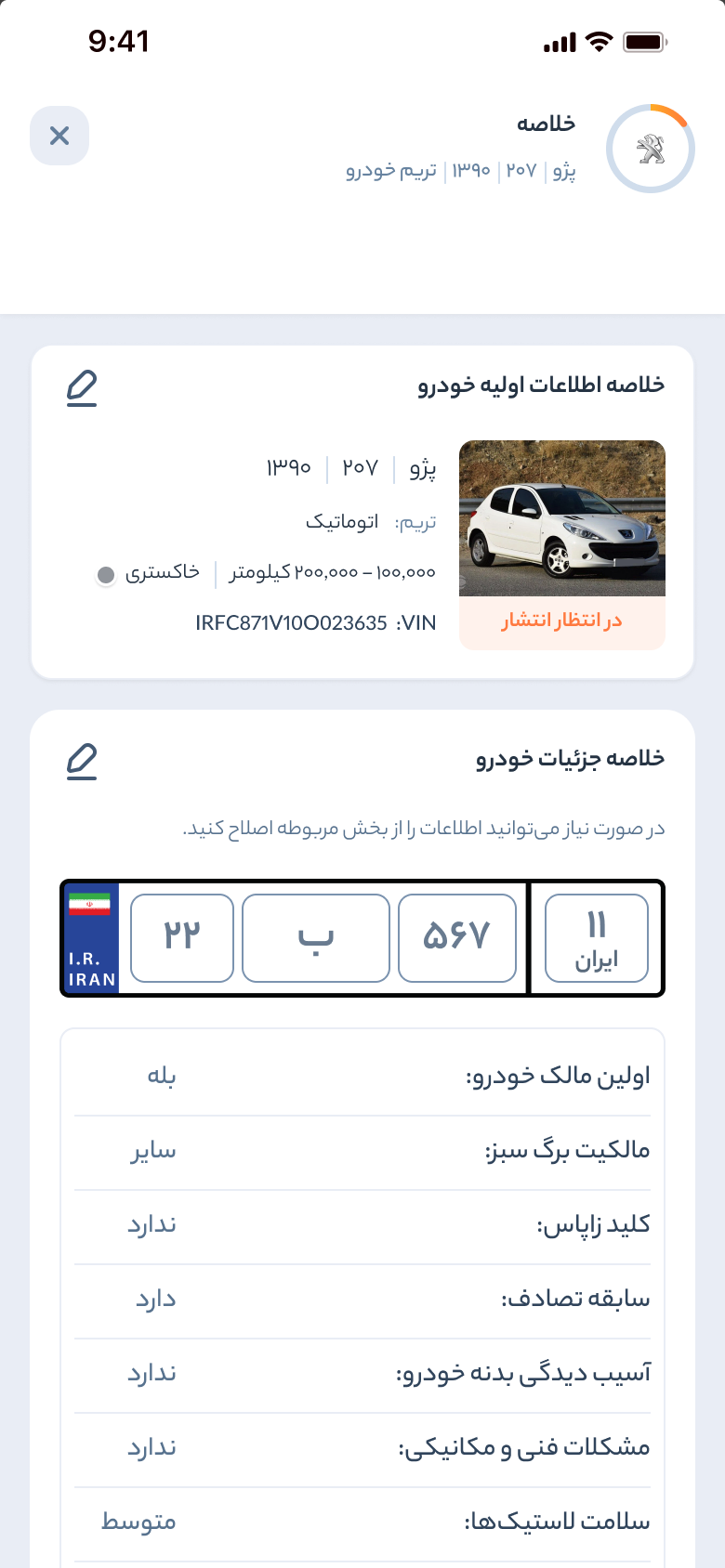
Summary, awaiting publication
08Business model
Paying for access, or earning by volume
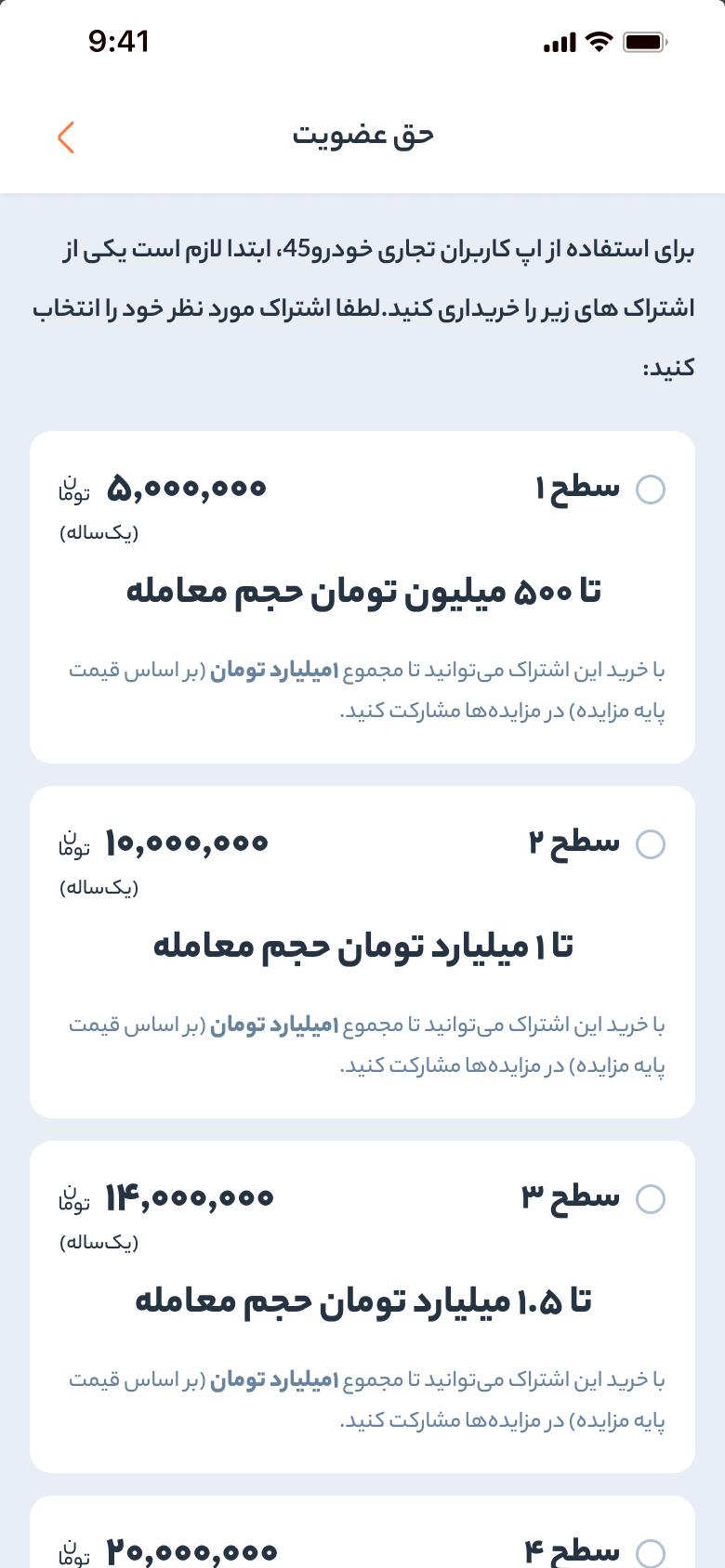
The file keeps two dealer memberships. In one, a dealer must buy one of five annual subscriptions before using the app, and each level caps the total they can bid on, from 500 million toman up to unlimited.
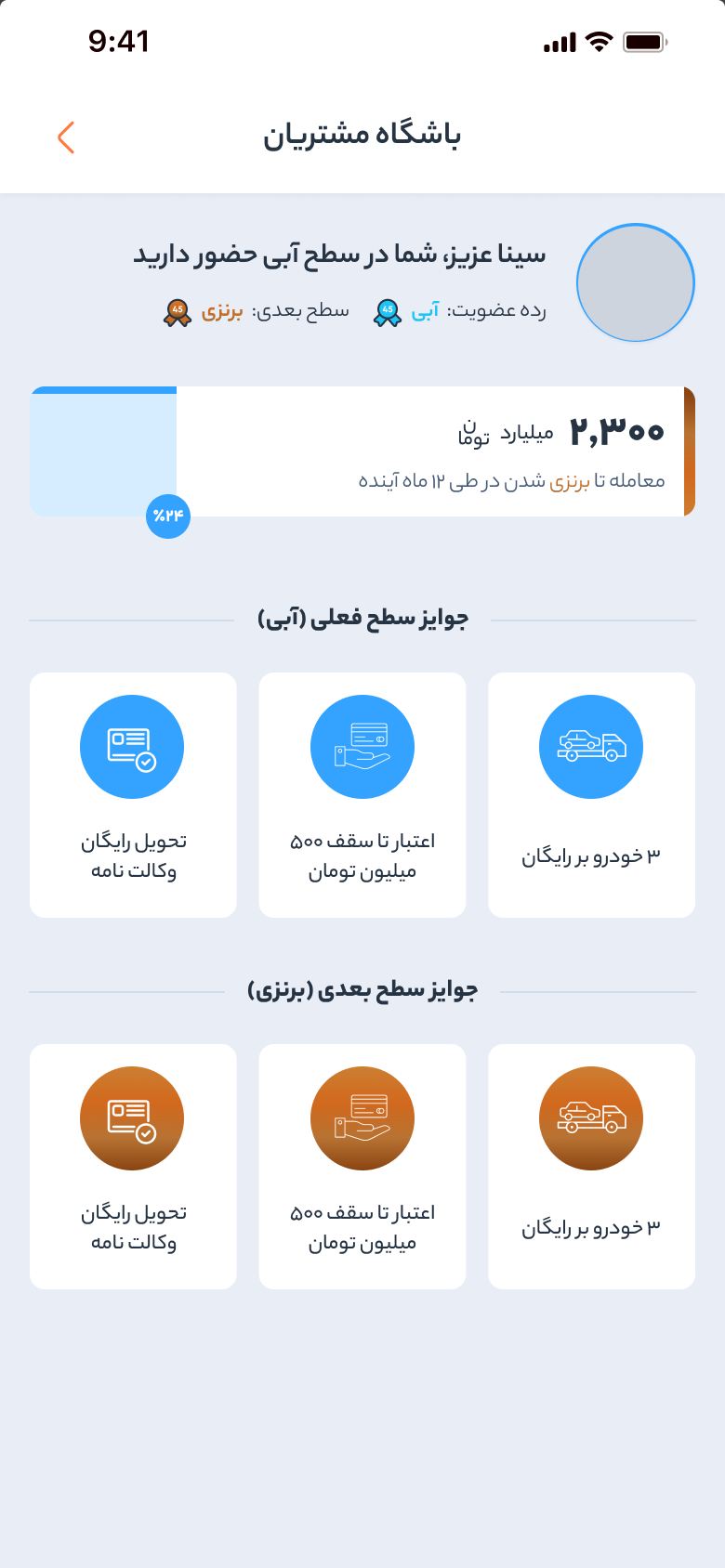
In the other, a Customer Club, dealers climb tiers by trading volume over twelve months and earn rewards: credit up to 500 million toman, free delivery of the power of attorney and three free car transports. The file does not say whether one replaced the other.
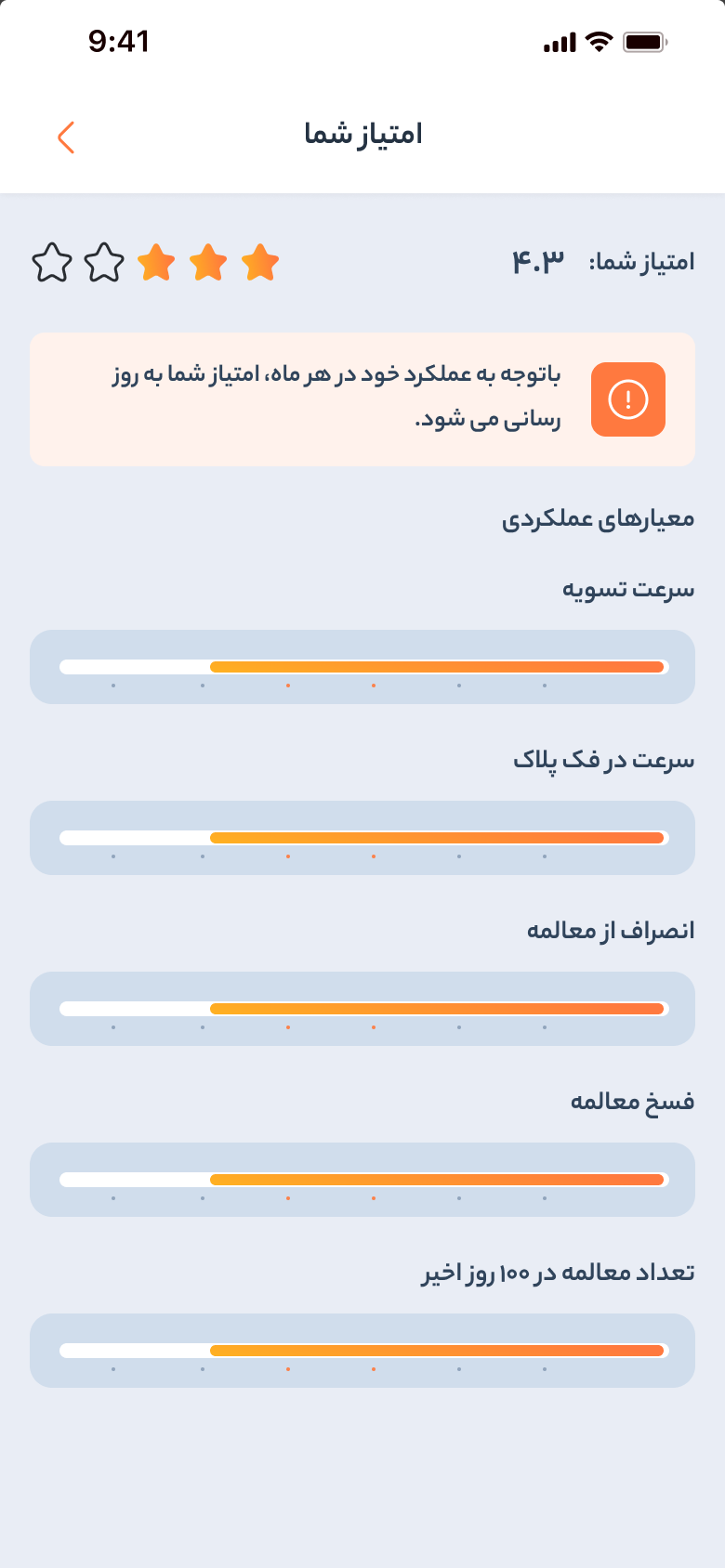
A dealer score sits beside both: a rating out of five, updated monthly from settlement speed, plate-release speed, withdrawals, cancellations and the number of deals in the last 100 days.
Paid access: five annual levels
01Settlement speed
02Plate-release speed
03Withdrawals from deals
04Cancelled deals
05Number of deals in the last 100 days
Figure 13The dealer score: a rating out of five, updated each month from five measures of how a dealer settles.
09Method
Tested as flows, in two themes
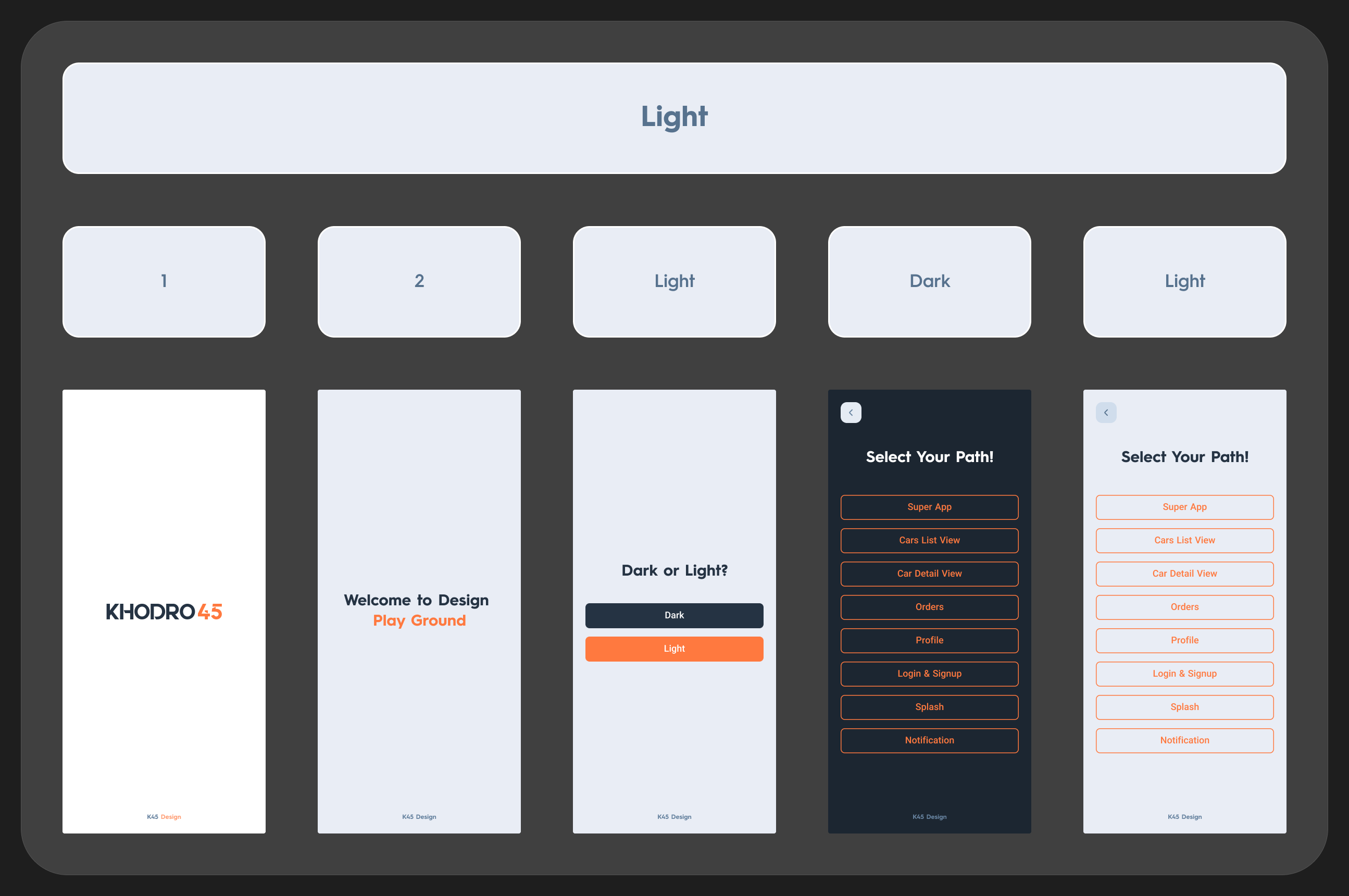
Almost every section is drawn twice, once dark and once light: 110 dark and 127 light screens across the sections. A prototype entry board, titled Welcome to Design Play Ground, lets a tester choose dark or light and then a path through the app.
Transaction status has a prototype of its own. Its 24 screens take one order through negotiation, the seller's counter-offer and the deposit, where countdowns and penalties make an unclear state expensive.
Figure 14The prototype entry board: a welcome, dark or light, then a choice of path.
10My role
Sina's part
Listed from the design file. It does not record who else worked on the app or who decided what, so this is not a claim of sole authorship.
Owned
↳The structure of the three market modes and their car pages
↳The price block and the layout of the inspection report
↳Bidding, automatic bidding and the costs sheet
↳Negotiation and settlement states, and the prototype that tests them
↳The listing and self-inspection flow
↳Memberships, the Customer Club and the dealer score
↳Light and dark themes, right to left in Persian
Co-owned
—
Collaborated
↳Product and development colleagues, not named in the file
The placeholder user throughout the file carries Sina's own name: a sign of whose working file it was, not of who decided what.
11Outcomes
What the file delivers
Counts of designed work, not results. The file records no usage, conversion or transaction figures.
phone screens
241
237 inside the sections and 4 loose on the canvas, roughly half dark and half light
Delivered output
canvas sections
43
Markets, car pages, bidding, orders, listing, money, identity and entry
Delivered output
screens in the transaction prototype
24
One order taken through negotiation and deposit
Delivered output
What was delivered
↳Three market modes with their car pages
↳The inspection report inside the car page
↳Bid, automatic bid and costs sheets
↳Negotiation and the six-stage settlement
↳Listing with self-inspection
↳Memberships and the dealer score
12What I learned
What this work taught
01
A price needs a neighbour
A bid means little on its own. Every price in the app sits beside another one (fair price, seller's ask or last offer), so the dealer judges a gap rather than a figure.
02
In a transaction, the states are the product
Most screens after a win are the same card in a different state. Naming each state, its next step and its deadline was the design work; the layout barely changes.
03
Access fees work against a marketplace
An auction needs participation. A subscription that caps bidding limits exactly that, and a club that rewards volume pushes the other way. Keeping both in the file makes the trade-off visible.
Market: last offer, seller's ask and distance to a deal
Bazaar: time left, highest bid and fair market price
Figure 03The three market lists. The tabs are the app's own: live auction, showroom and bazaar.
Showroom market
Figure 04The same car's price block in two modes. Live sets the highest bid against the fair market price; Market sets the last offer against the seller's asking price. The service fee sits under both.
Evidence
The order list with its states, and the six numbered stages.
04
Warn before reopening the auction
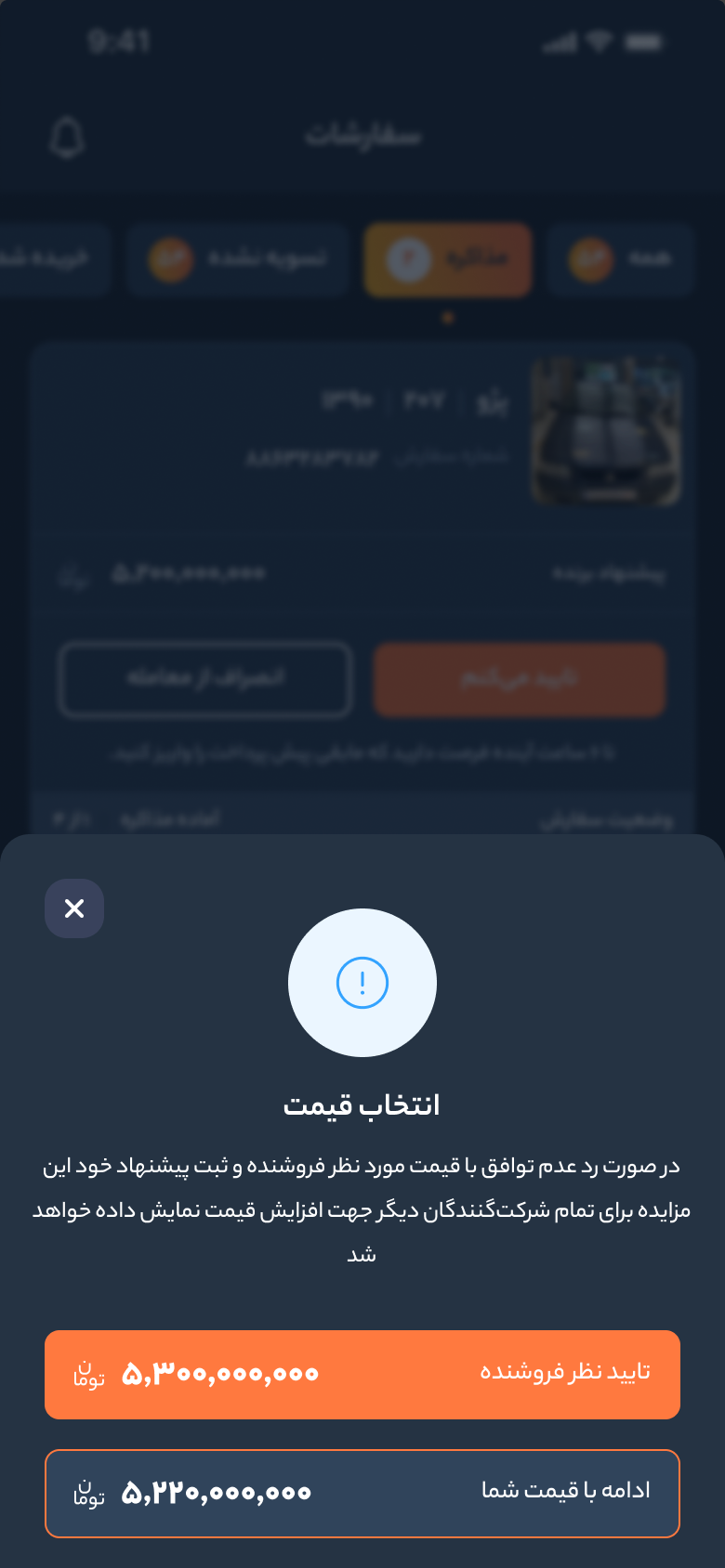
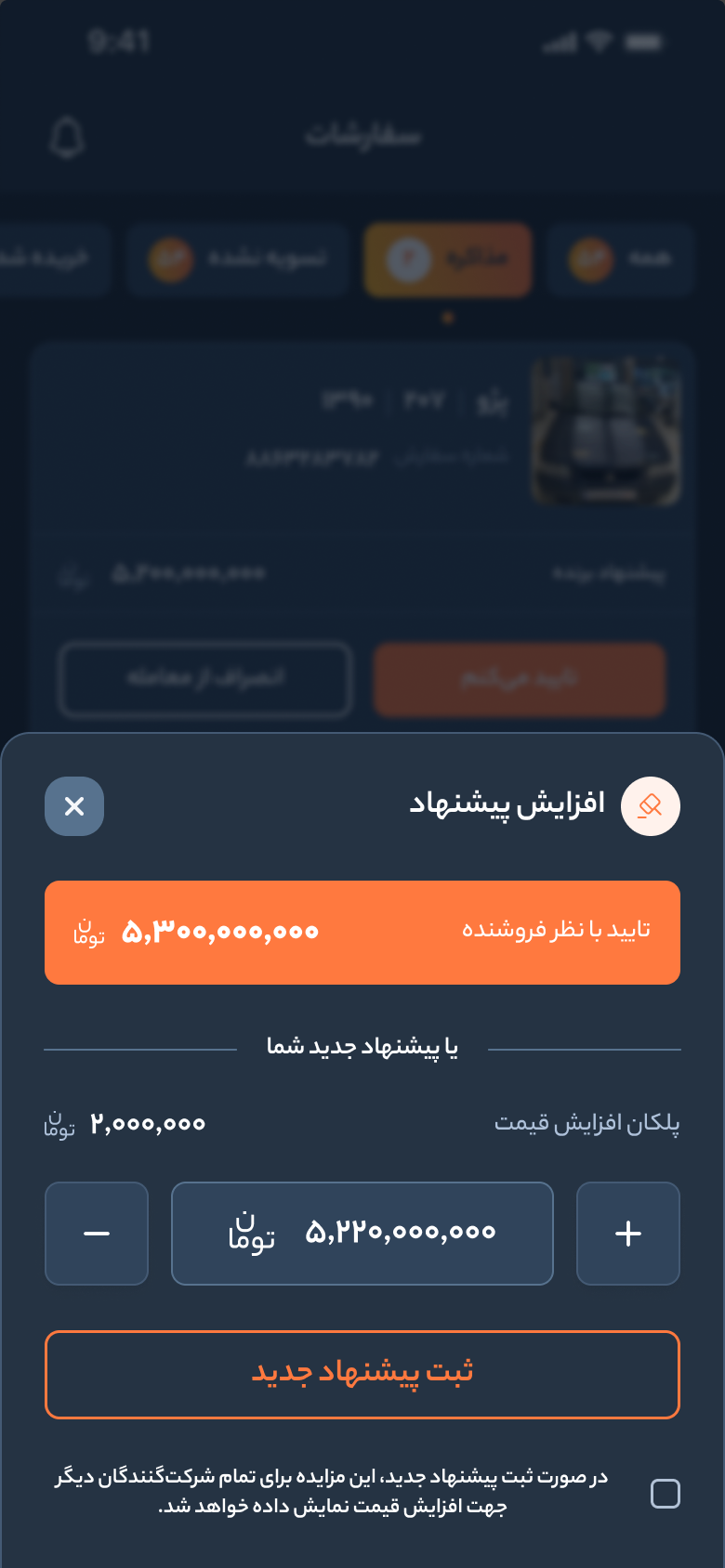
In negotiation, rejecting the seller's price and entering your own reopens the auction to other bidders. The sheet says so in full and, in one version, asks the dealer to tick a box before submitting.
Trade-off
One more step at the moment a dealer is trying to close.
Evidence
The two negotiation sheets from the prototype.
05
Show every cost before the commitment
The service fee sits in the price block, and a costs sheet lists the rest (municipal charges, transport, title transfer and plate release) with a total, reachable from the car page before any bid.
Evidence
The costs sheet beside the bid.
Body, tyres and chassis
Figure 05The inspection report inside the car page: the car's facts first, then body and tyres with the damage map and the chassis findings part by part.
Inspection guarantee
Costs before the bid
Figure 06Around the bid: an automatic bid with its own step, the body-inspection guarantee, and the costs sheet with its total.
03
Final settlementThe rest of the price, on its own clock.
04
ConfirmationThe settlement is confirmed before the car moves.
05
HandoverThe car and a power of attorney change hands; the contract balance is paid.
06
Plate releaseA receipt is uploaded, and the guarantee is paid back.
Raise the offer, after ticking the box
Figure 07Negotiation as the prototype draws it. Rejecting the seller's price reopens the auction to other bidders, and the sheet says so before the dealer submits.
Accepted, needs a higher offer
Needs a new offer, completed, cancelled
Figure 08One order list holding every state a deal can be in, each with its own action and, where time matters, a countdown.
Order page, stage one of six
Figure 09The later stages on the order list, and the order page at stage one: the amounts, the next stage, and a plate-release guarantee that Khodro45 pays back.
Ownership and condition
Photo guide: the whole car, about two metres away
Mark the damaged panels
Figure 10Listing a car: the stepped form, the questions about ownership and condition, the photo guide, and damage marked panel by panel.
My cars: listing and auction switches
Views and messages per platform
Figure 11After the form: a summary awaiting publication, the dealer's own cars with their statuses, and one car's reach on each platform.
Customer Club: tiers and rewards
Figure 12Two memberships in one file: five paid annual levels with bidding caps, and a Customer Club that rewards volume. Whether the club replaced the paid levels is not recorded.